REVIEW · SYDNEY
Sydney: Indoor Skydiving Experience
Book on GetYourGuide →Operated by iFLY Indoor Skydiving AU · Bookable on GetYourGuide
Free-fall, minus the plane. That’s the hook of indoor skydiving in Sydney, where you fly in a controlled glass wind tunnel that mimics the real thing without jumping out of an aircraft. I love how quickly you go from listening to actually moving your body in the airflow, and it feels like the kind of adrenaline you can share right away.
The other thing I like a lot is the two-flight format. You get a second go after you’ve learned the basics, so your first flight isn’t just a trial run—it becomes practice, and the second flight is where you usually feel more in control. The main drawback is that it’s not for everyone physically, and there are height/weight and health limitations you’ll want to take seriously before you book.
In This Review
- Key things you’ll notice right away
- Indoor free-fall in Sydney: what the wind-tunnel flight really feels like
- Your 90 minutes at iFLY: check-in, gear, then two real flights
- Training that gets you flying, not just watching
- Safety and body limits: when to book, when to ask a doctor
- Price and value: why $84 can feel fair (if you fit the limits)
- Family-friendly thrills in Penrith: fun for kids and confidence for adults
- Making your flight count: small prep choices that help a lot
- What’s included (and what you’ll likely want to plan for)
- Should you book iFLY Indoor Skydiving in Sydney?
- FAQ
- How long is the indoor skydiving experience?
- How many flights do I get?
- What does the price include?
- What should I wear and bring?
- Are there height and weight limits?
- Is it suitable for young children?
- Is the facility wheelchair accessible?
- Do I need to sign a waiver?
Key things you’ll notice right away
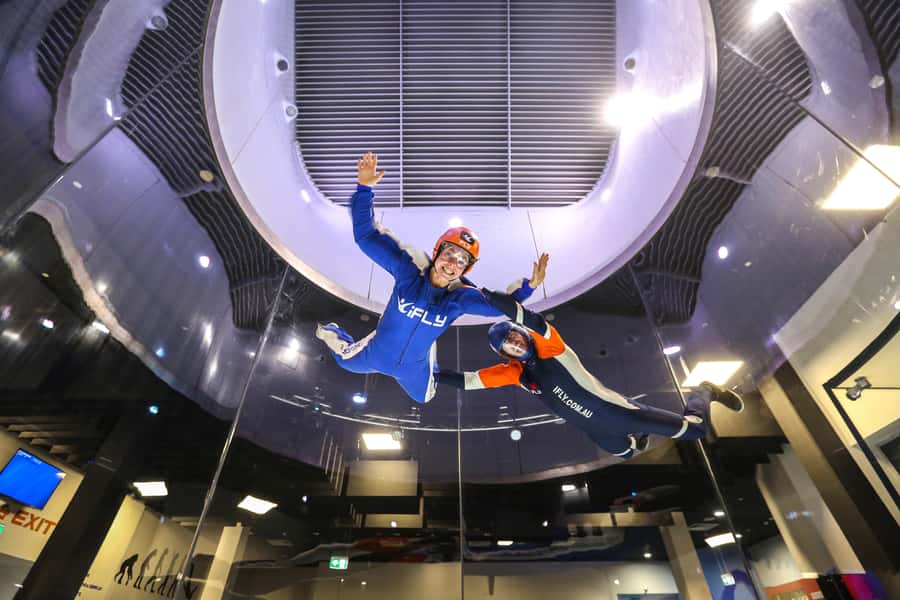
- A giant glass wind tunnel that gives you real free-fall sensations on a column of air
- Two flights in one session, meaning more time flying than a single try
- Hands-on instructor coaching that helps you learn body control fast
- A kid-friendly, family-ready vibe while still feeling thrilling for adults
- A clean, well-run facility with staff who stay calm and attentive
Indoor free-fall in Sydney: what the wind-tunnel flight really feels like
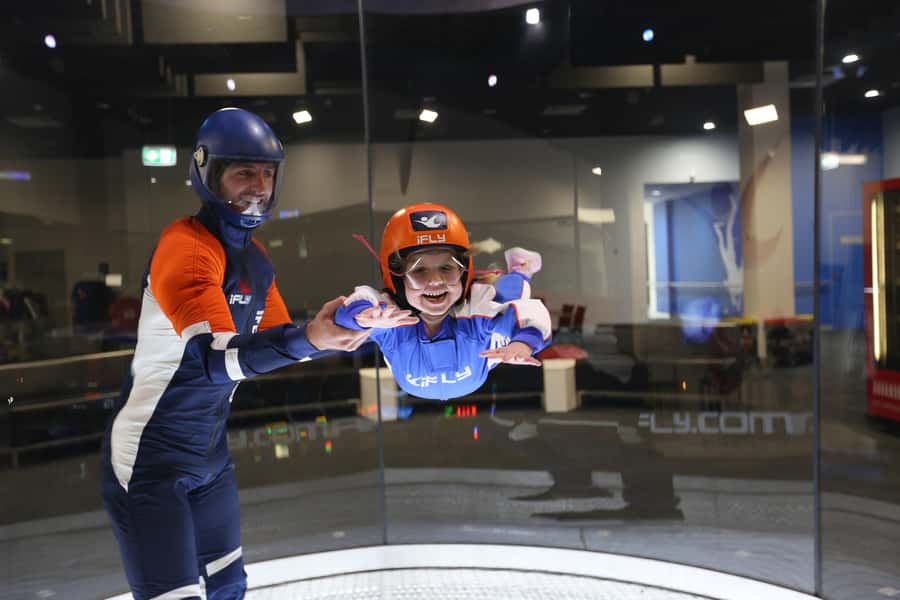
Think of this as skydiving training in the most practical way possible. You’re lifted by a strong, steady airflow inside a large indoor wind tunnel, and your job is to lean into it so your body finds balance in the air. It’s the closest you’ll get to that nothing-attached-to-the-ground feeling without aircraft, jump altitude, or sky conditions.
The setting is part of the magic. That transparent tunnel wall means you can see what’s around you while you’re flying, which makes the experience feel more approachable for people who get nervous. And because the wind speed and airflow are controlled, you’re not guessing about what happens next.
I also like the way it blends thrill and learning. It’s not just a ride—you’re taught to fly your body in free-fall style, guided by an instructor right there with you. That’s why it tends to feel addictive: you finish one flight and already want another attempt with more confidence.
You can also read our reviews of more tours and experiences in Sydney.

Your 90 minutes at iFLY: check-in, gear, then two real flights
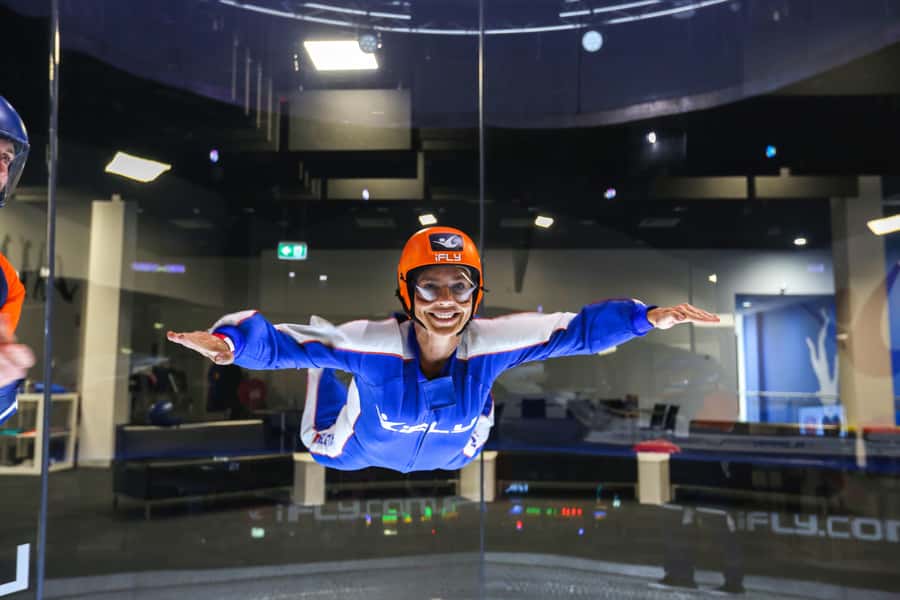
The whole experience is about 90 minutes, and you’ll spend most of that time moving through the steps that make the flying portion smooth. Plan to arrive at least 1 hour before your flight time, because late arrivals can’t be refunded, and you’ll want buffer time for setup.
When you get there, you’ll check in at reception and meet your instructor. Next comes a quick but important safety briefing, then you’ll gear up in a flight suit, helmet, and goggles before you step into the tunnel zone.
Then it’s flight time. You’ll be guided into position in the airflow and instructed to lean into the wind so your body floats in a stable column of air. After the first flight, you’ll repeat the process for a second flight—this is where the experience often clicks, because you can apply what you learned the first time.
What you should remember: the flying happens inside, so you’re not dealing with weather. That makes it a solid activity when Sydney’s plans might get interrupted by rain or shifting conditions.
Training that gets you flying, not just watching
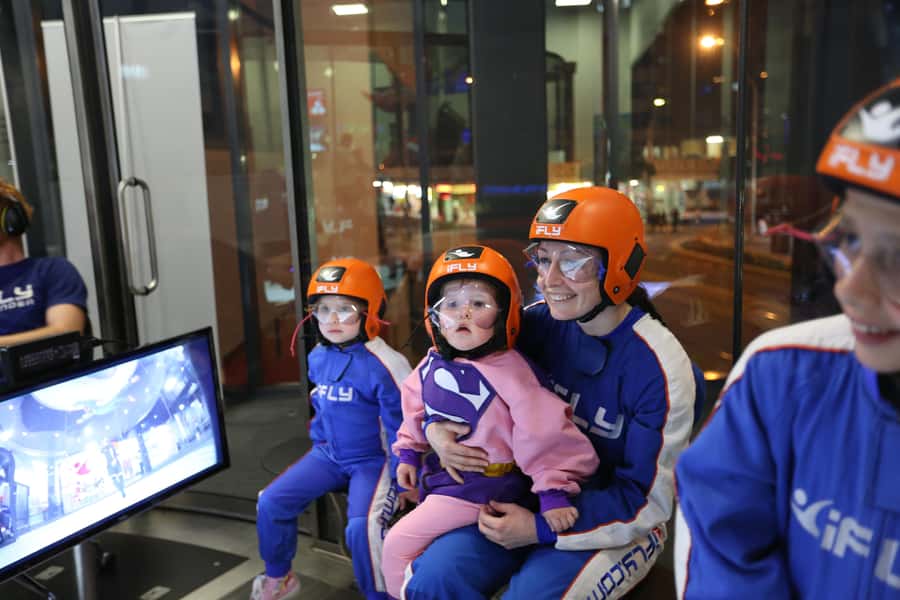
One of the best parts of this experience is the training approach. You’re not expected to have any background, and you’re not left alone to figure out how to stay stable in the air. The instructor gives personal, hands-on assistance and coaching so you can learn body positions that mimic what skydivers do after exiting a plane.
During the flight, you’ll practice the basics of controlling your body in free-fall. Your job is to get comfortable with the airflow and learn how small changes in your posture affect how you float. The goal isn’t perfection—it’s progress from flight one to flight two.
That structure matters for value. With two flights, you have time to build comfort and then use that comfort to improve. When you’re doing something this physical, one short attempt can feel like a blur. Two attempts let you actually start to feel the mechanics of the air.
Safety and body limits: when to book, when to ask a doctor
This is designed to be safe and ultra-controlled, which is the whole point of an indoor tunnel setup. You’ll still get a briefing, you’ll use rented equipment, and you’ll be coached throughout. The airflow environment is controlled, and your instructor’s job is to guide you through stable positions.
That said, you must pay attention to the “not suitable for” list and the health notes. Children under 3 years aren’t suitable, and pregnant women aren’t suitable. People with back problems or heart problems should consult a doctor before their flight date.
There are also physical limits connected to flight body parameters: if you’re under 180 cm, you must weigh less than 105 kg; if you’re over 180 cm, you must weigh less than 115 kg. The data also lists people over 230 lbs (104 kg) as not suitable, so it’s worth double-checking your numbers when you book.
If you have a history of shoulder dislocations, you’re strongly advised not to fly. That’s a key one because it can affect how your body needs to hold position during flying and equipment use.
If you’re unsure, I’d rather you pause and check first than hope it works out. A quick medical conversation can save you from an experience that’s risky or uncomfortable.
Price and value: why $84 can feel fair (if you fit the limits)
At $84 per person and about 90 minutes total, the pricing is really tied to one thing: you’re getting 2 flights. That’s not a small detail. Many thrill activities feel expensive because you get one brief moment of the main event. Here, you get a second chance after instruction.
The experience also includes a comprehensive training session, equipment rental, and personalized flight certificate—so the cost isn’t just paying for time in the tunnel. You’re paying for coaching, safety setup, and the full sequence that turns nerves into actual flight control.
It’s also positioned as family-friendly, which changes the math. If you’re traveling with kids or teens old enough for the minimum age, the experience gives everyone a shared adrenaline moment without requiring separate activities.
The one value caveat is simply fit: if you’re outside the weight/height limits or in a health group that requires caution, you might not be able to participate. In that case, no price is worth it if you can’t safely fly.
- Blue Mountains Small-Group Tour from Sydney with Scenic World,Sydney Zoo & Ferry
★ 5.0 · 3,709 reviews

Family-friendly thrills in Penrith: fun for kids and confidence for adults
This is one of those rare activities that works across ages. The setup is family oriented, and the experience is described as suitable for the whole family in an ultra-safe environment. If your kids are old enough (and you’re not dealing with the under-3 limit), they’ll likely enjoy the clear structure: briefing, gear, then flying.
For adults, the psychological side is often a big win. Indoor free-fall can help people challenge fear of heights or instability in a setting that feels controlled. One of the standout themes from recent experiences is how the coaching helps people get over that first mental block fast.
There’s also more to do at the facility than just the tunnel. The center offers additional activities such as VR, which can help if you’re coming with younger kids who might not want to wait around doing nothing.
If you need an easy arrival plan, one helpful approach is using public transport to Penrith Station, then taking a short bus hop from there. I’d still check the exact meeting point for your booking option, since it can vary.
Making your flight count: small prep choices that help a lot
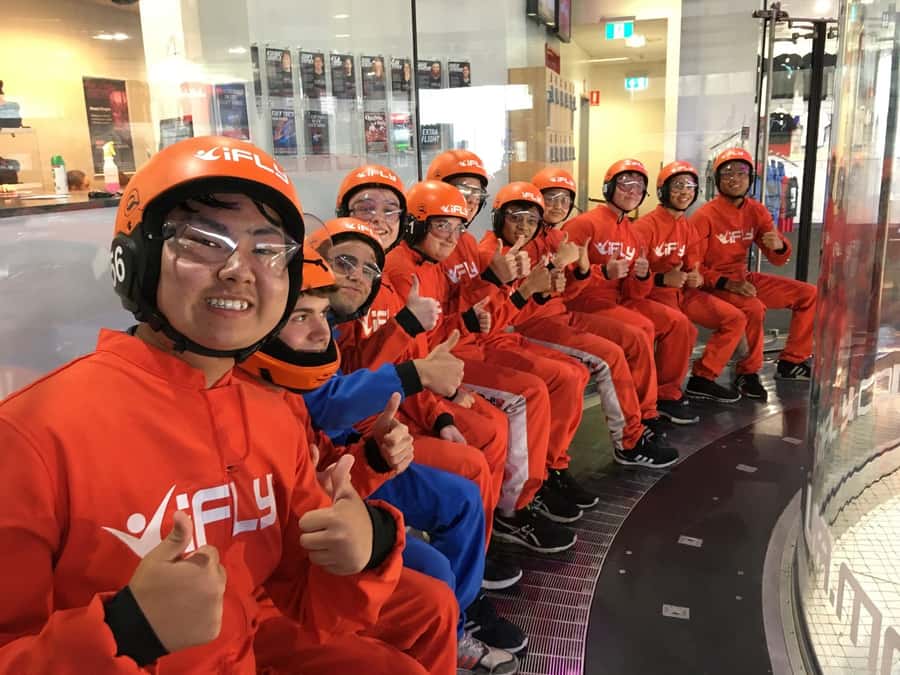
You don’t need special equipment beyond what the center provides. The main things to bring are comfortable clothes and closed-toe shoes, because you’ll be suited up for the flight and need footwear that works with the facility.
Arrive early, even if you think you’re on time. Getting set up right before flying is where most stress comes from, and arriving at least 1 hour ahead gives you breathing room for gear checks and getting fully oriented.
When you step into the tunnel, listen closely to the instructor’s body cues. You’ll usually learn fast if you focus on what changes your balance instead of trying to copy a perfect position. Your first flight is basically learning how your body responds to the airflow. Your second flight is where that learning pays off.
Also, set expectations for how long you’ll feel “on.” This isn’t a long sequence of silent floating. You’ll move through training, then fly, then reset. That keeps it energetic, and it helps with attention spans—especially for families.
What’s included (and what you’ll likely want to plan for)
Included in your package are 2 flights for 1 person, a comprehensive training session, and equipment rental (flight suit, helmet, and goggles). You also get hands-on personal assistance from your flight instructor.
There’s a personalized flight certificate too, which is a nice souvenir because it’s tied to your participation rather than being a generic printout.
Not included: video recordings of all flyers in your session are available for purchase. If you know you want that extra keepsake, plan a little room in your budget for it, since it’s separate from the base price.
The instructor language is English, and small group options are available, which can matter if you want less waiting and more direct coaching.
Should you book iFLY Indoor Skydiving in Sydney?
Book it if you want real free-fall energy in a controlled indoor setup, and you like the idea of learning how to fly your body instead of just having a one-time thrill moment. The two-flight structure is a big reason this is good value, especially for families and first-timers.
Skip or double-check before booking if you fall into the not-suitable categories like pregnancy, back problems, heart problems, or under-3 age. If you have a shoulder dislocation history or you’re near the weight/height limits, it’s worth being cautious and confirming you’re eligible so the day stays fun for the right reasons.
If you’re the type who loves trying things that feel a little scary but manageable, this is the kind of activity that can turn nervous energy into confidence fast—then hand you a second flight to prove it.
FAQ
How long is the indoor skydiving experience?
The duration is 90 minutes.
How many flights do I get?
You get 2 flights for each person.
What does the price include?
It includes a comprehensive training session, equipment rental, hands-on assistance from your flight instructor, and a personalized flight certificate.
What should I wear and bring?
Bring comfortable clothes and closed-toe shoes.
Are there height and weight limits?
Yes. If you are under 180 cm tall, you must weigh less than 105 kg. If you are over 180 cm tall, you must weigh less than 115 kg.
Is it suitable for young children?
Children under 3 years are not suitable.
Is the facility wheelchair accessible?
Yes, the facility is wheelchair accessible, and people with certain physical impairments can fly.
Do I need to sign a waiver?
Anyone 18 years of age and over must sign a liability waiver. Anyone under 18 must have a parent or guardian sign the waiver.
You Might Also Enjoy


More Tour Reviews in Sydney
- Blue Mountains Small-Group Tour from Sydney with Scenic World,Sydney Zoo & Ferry
★ 5.0 · 3,709 reviews