REVIEW · SYDNEY
Sydney Queer Walking Tour
Book on Viator →Operated by Queer Sydney Walking Tour · Bookable on Viator
Sydney’s pride stories are written in plain sight. This 2-hour Sydney queer walking tour links major landmarks to the people, protests, and parties that shaped queer life in the city. It moves from colonial-era hints to the 1970s rights push, then onward to the turning point of the first Mardi Gras in 1978.
I love how the guide, Michael, makes the details click and keeps the pace moving from stop to stop. I also like the small group size (max 12), which helps you stay in the story instead of getting lost in a crowd.
One thing to consider: the tour covers serious periods, including the HIV epidemic and public protest years. If that feels like a lot for your day, you may want to plan something lighter right after.
In This Review
- Key highlights before you go
- Start at the Law Courts Library: getting oriented fast
- Archibald Memorial Fountain: a landmark that points to what’s missing
- What I think this stop does well
- Whitlam Square and the Emden Gun: the 1970s rights era in real-world context
- A practical tip for this stop
- Green Park and Darlinghurst backstreets: a quieter moment with heavy context
- Why this stop matters
- Small drawback to plan around
- Kinselas Hotel at Taylor Square: June 1978 and the start of Mardi Gras
- What I’d watch for here
- Price and value: is $53.79 worth it?
- Timing and pacing: how to make the most of the 9:30 start
- Who this tour suits best
- Should you book this Sydney Queer Walking Tour?
- FAQ
- What is the duration of the Sydney Queer Walking Tour?
- How much does the tour cost?
- Where does the tour start and end?
- What time does the tour begin?
- How big is the group?
- Is it easy to use public transport, and are service animals allowed?
Key highlights before you go
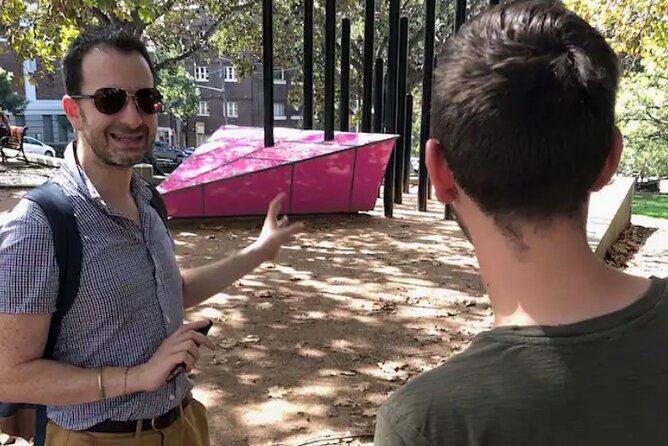
- Max 12 people means you get a real chance to follow the thread at each landmark
- Four landmark stops trace queer Sydney from colonial clues to the 1978 Mardi Gras moment
- Michael’s storytelling keeps you engaged across the full 2 hours
- Darlinghurst backstreets show history where you can actually picture everyday life
- Coffee/tea break time gives you a breather without breaking the flow
Start at the Law Courts Library: getting oriented fast
Your tour begins at the Law Courts Library, 184 Phillip St. It’s a smart start point because you’re close to major streets and transit, so you can arrive without stress. The walk is designed as a compact route, with four stops that each take about 30 minutes.
Expect the tour to feel like a guided city conversation. You’ll hear how queer life in Sydney didn’t appear all at once. Instead, it shows up in layers: hints in older places, then more direct organizing and visibility as the 1970s roll into the mainstream.
Also, you’ll be using a mobile ticket. That matters because you can keep things simple on a busy travel day. No searching for paper. Just show up and go.
You can also read our reviews of more walking tours in Sydney
Archibald Memorial Fountain: a landmark that points to what’s missing
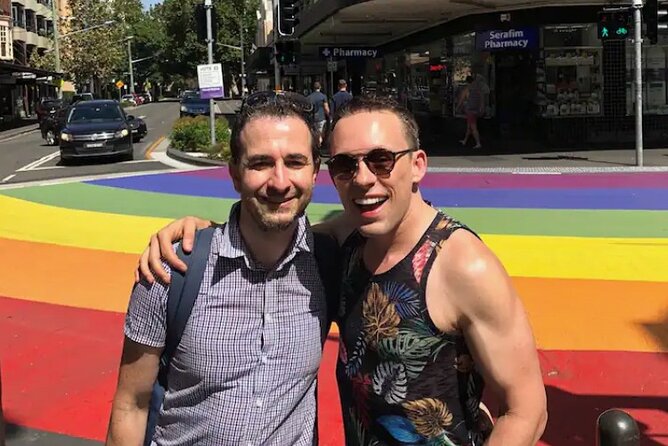
The first stop is the Archibald Memorial Fountain. This is where the tour frames a key theme: queer history often lived in the margins, so the evidence can feel scattered or indirect. The fountain becomes a starting symbol for those hidden layers in the city—clues you can connect once you know what to look for.
You’ll also hear about queer history moving from colonial times into the 1970s. That span can feel huge on paper, but the way the tour sets it up makes it easier to follow. You’re not just memorizing names and dates. You’re learning how conditions, laws, and public attitudes shaped what people could say out loud.
One more important point: the tour includes discussion of indigenous Australia’s view on diverse sexual orientation and gender. That gives context beyond colonial-era stories and helps you understand the deeper, older roots of gender and sexuality diversity in the region.
What I think this stop does well
It sets your expectations. If you go in thinking you’ll only hear about the famous parade years, you’ll come out understanding why earlier chapters matter—and why they can be hard to find.
Whitlam Square and the Emden Gun: the 1970s rights era in real-world context
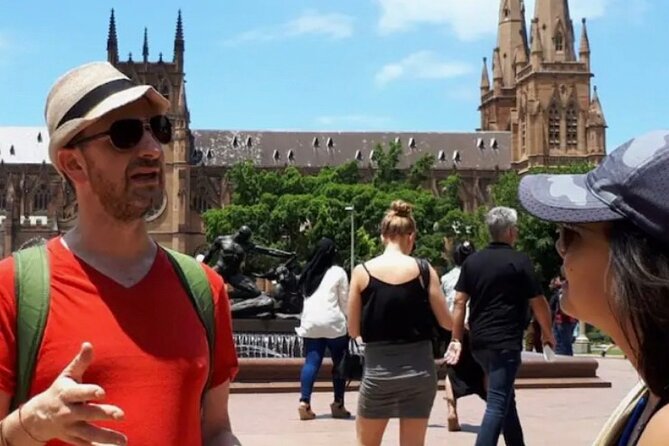
Next you head to Whitlam Square for the Emden Gun stop. This part of the walk zooms in on the 1970s as a turning point for fairness and equality. The message here isn’t vague. You get a sense of how legal and social pressure built, and how activism began making claims more publicly.
The tour also highlights the media’s role. That’s a huge deal in any rights movement, because visibility can help people organize—but it can also attract backlash. You’ll get a clearer picture of how queer issues moved from being largely sidelined to becoming something mainstream audiences couldn’t ignore.
This is also where the tour’s structure starts to feel extra useful. Each stop doesn’t just add trivia. It answers a practical question: How did the city change from one era to the next?
A practical tip for this stop
Listen closely to the way the tour connects media, public response, and organizing. If you catch that link, the later Mardi Gras story in June 1978 lands with more meaning instead of feeling like a standalone event.
- Blue Mountains Small-Group Tour from Sydney with Scenic World,Sydney Zoo & Ferry
★ 5.0 · 3,709 reviews




Green Park and Darlinghurst backstreets: a quieter moment with heavy context
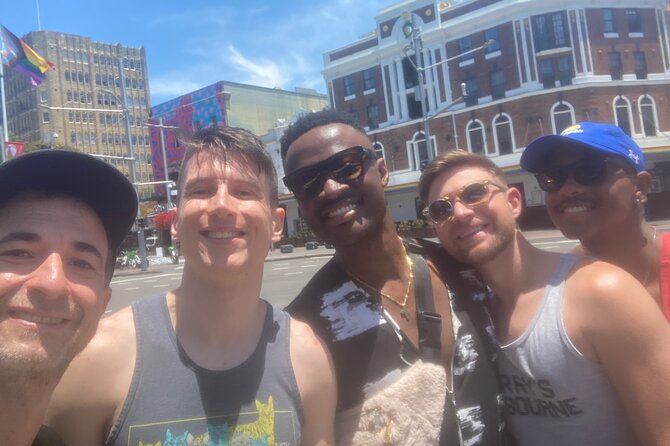
The route then winds through the backstreets of Darlinghurst. That’s a big part of why this tour works. You’re not only looking at monuments. You’re seeing the kind of urban spaces where people live, meet, and build community—often away from the biggest headlines.
Here, the tour includes a coffee/tea stop along the way at a local café. It’s not just a break for your legs. It’s also a reset so you can absorb the heavier topic that comes next.
The discussion at this stage focuses on how Sydney handled the HIV epidemic. Because the tour has already built context through earlier eras, this section doesn’t feel like it drops in suddenly. You’re placed in the timeline and helped understand how reform, activism, and community life shifted during those years.
Why this stop matters
This is the part of the tour that helps you connect public celebration with private reality. Mardi Gras is joyful, but it didn’t grow in a vacuum. Learning about the HIV-era context gives the later protest-and-party decades a grounded emotional base.
Small drawback to plan around
If you’re the type who likes upbeat pacing all the way through, this section may feel emotionally heavier than you expect. That’s not a flaw—it’s just good to know.
Kinselas Hotel at Taylor Square: June 1978 and the start of Mardi Gras
The final stop is Kinselas Hotel at Taylor Square. This is where the tour reaches the most famous headline of the whole route: what happened in June 1978 at that very spot, during the first Mardi Gras.
You’ll hear why that moment still matters. The tour connects it to a broader idea: queer life in Sydney didn’t just celebrate identity. It also used public visibility as a form of calling—like a message carried forward through the years.
The way this stop is framed helps you understand Mardi Gras as more than a parade. It’s part protest, part community declaration, and part cultural rhythm. And because the tour has already covered reform efforts from the 1970s onwards and the HIV epidemic years afterward, you can see why later decades involved both public energy and real-world struggle.
What I’d watch for here
Pay attention to how the tour explains why the site matters in Queer Sydney today. If you focus on that connection—event location to lasting impact—you’ll remember this stop long after the walk ends.
Price and value: is $53.79 worth it?
At $53.79 per person, this tour sits in a mid-range zone for Sydney walking experiences. What makes it feel like good value is the combination of:
- A tight 2-hour route with four distinct landmark chapters
- A small group cap of 12, which keeps it personal
- The fact that no paid entries are listed at the stops, so you’re not stacking extra costs while you walk
- A clear thematic structure: colonial-to-1970s-to-1978-to-HIV-era context
If you want a Sydney queer history overview that’s easy to fit into a normal day, the price feels reasonable. You also get the practical convenience of a mobile ticket and a starting point that’s straightforward to reach.
If you already know a lot of LGBTQ history in detail and want a super-specific, academic focus, you might find it less granular. But for most visitors, it’s a smart way to get oriented fast—especially if you want to leave with stories you can connect to places you’ll actually pass afterward.
Timing and pacing: how to make the most of the 9:30 start
The tour runs for about 2 hours and starts at 9:30 am. A morning start helps for two reasons. First, you beat crowds and heat. Second, you get a storyline early in the day, so the rest of Sydney makes more sense when you glance around at streets and buildings later.
Each of the four stops gets around 30 minutes. That means you won’t get stuck in one place for ages, but you also won’t feel rushed through all the context.
Dress for walking. You’ll be moving through central areas and backstreets, and you may pause for discussion at each stop. If you plan to do other activities afterward, I’d schedule something flexible—because the emotional sections (especially around HIV) can make the tour feel longer in your head, even if the clock stays on track.
Who this tour suits best
This works especially well if you:
- Want an easy-to-follow queer history route tied to real landmarks
- Prefer learning by walking and looking, not by reading alone
- Like tours that connect famous moments (like Mardi Gras 1978) to the social realities that followed
- Enjoy small-group guides who keep the energy focused
It may be less ideal if you dislike serious historical topics. The tour includes discussion of the HIV epidemic and protest periods, and those parts matter to the overall story.
If you’re visiting Sydney for the first time, this tour is also a strong way to understand local culture beyond the postcard view. You’ll leave with names, events, and locations that make the city feel more personal.
Should you book this Sydney Queer Walking Tour?
I think you should book it if you want a compact, place-based introduction to Sydney’s queer history—and you want it guided by Michael, who keeps the tour engaging from start to finish. With a small group size and a route that connects colonial-era clues to the first Mardi Gras in June 1978 and the years around the HIV epidemic, you’ll get a clear timeline that you can carry with you as you explore the city.
Skip it only if you want a light, purely celebratory outing with no serious discussion. This is respectful history, and it doesn’t pretend the hard parts didn’t happen.
FAQ
What is the duration of the Sydney Queer Walking Tour?
It runs for about 2 hours.
How much does the tour cost?
The price is $53.79 per person.
Where does the tour start and end?
It starts at Law Courts Library, 184 Phillip St, Sydney NSW 2000, and ends at Sydney Sustainable Markets, Taylor Square (at the intersection with Bourke Street), Darlinghurst NSW 2010.
What time does the tour begin?
The start time is 9:30 am.
How big is the group?
The tour has a maximum of 12 travelers.
Is it easy to use public transport, and are service animals allowed?
The tour is near public transportation, and service animals are allowed.
You Might Also Enjoy


More Walking Tours in Sydney

More Tours in Sydney
- Blue Mountains Small-Group Tour from Sydney with Scenic World,Sydney Zoo & Ferry
★ 5.0 · 3,709 reviews
More Tour Reviews in Sydney
- Blue Mountains Small-Group Tour from Sydney with Scenic World,Sydney Zoo & Ferry
★ 5.0 · 3,709 reviews