REVIEW · SYDNEY
Sydney Whale Watching on Small RIB
Book on Viator →Operated by Ocean Extreme · Bookable on Viator
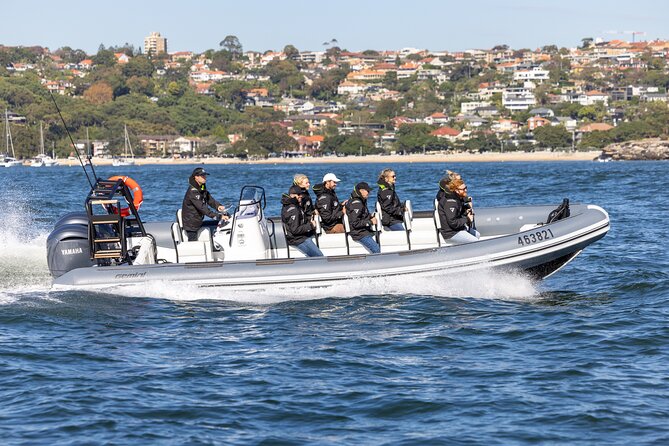
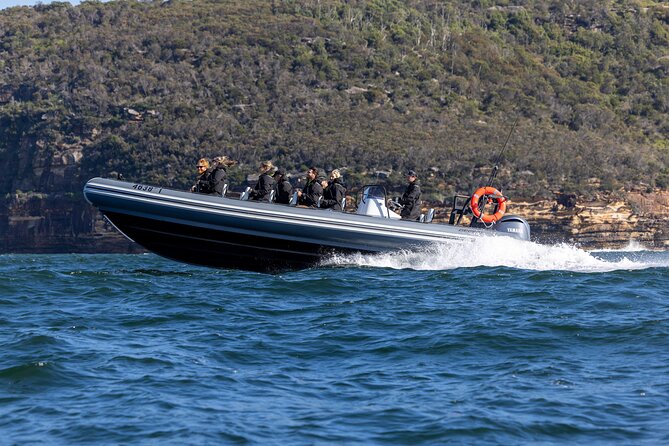
Small boat. Big whale energy. Ocean Extreme takes you out of Circular Quay on a 12-passenger RIB, so you get close without feeling packed, and the high-speed run helps you reach prime whale areas quickly. The captain and crew share real-time spotting guidance as you scan for whales.
I also like the chance to stay with the action; Captain Cassie is specifically praised for letting you linger as long as the whale experience stays active. The ride is described as comfortable and smooth, but one thing to plan around is that this is weather-dependent and it’s an open, fast boat experience, so come ready for some boat movement.
In This Review
- Key highlights you should know
- A 12-passenger RIB changes the whale-watching feel
- Getting started at Campbells Cove in Circular Quay
- Harbor landmarks on the way out: Fort Denison and Mrs. Macquarie’s Chair
- Sydney Heads: the moment the ocean takes over
- The main event: the whale search area and what to watch for
- The return run: a fast, scenic wrap-up from the water
- Price and value: what $98.93 really buys you
- Who should book (and who should think twice)
- Should you book Ocean Extreme’s small RIB whale watching?
- FAQ
- How long is the whale watching tour?
- How many people are on the smallest RIB?
- Where do I meet for the tour?
- What whales and marine wildlife are you looking for?
- Do I need a printed ticket?
- What’s the cancellation policy if weather is bad?
Key highlights you should know
- 12 passengers max means easier listening to the crew and less chaos when whales surface
- High-speed RIB transit helps you get to the best searching zone fast
- Humpback focus with watch-for behaviors like breaching, tail-slapping, and spouting
- Captain-led spotting so you’re not just drifting while hoping for sightings
- Circular Quay landmarks right away, including Opera House and Harbour Bridge views
- Short total time (about 2 hours) so you can fit it into a busy Sydney day
A 12-passenger RIB changes the whale-watching feel
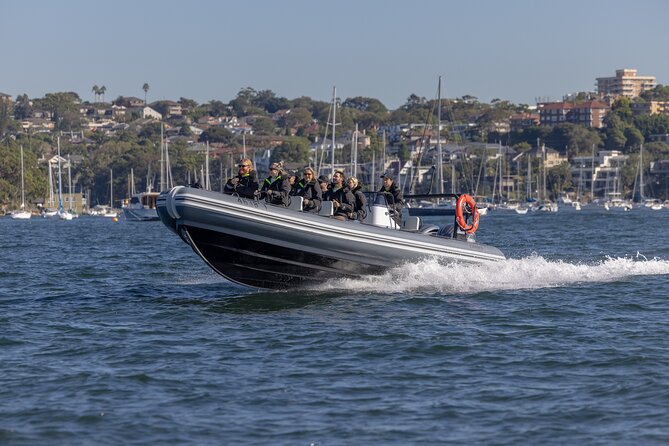
Whale watching can be a lot like trying to watch a concert through a crowd. This tour fights that problem with sheer size. Ocean Extreme’s smallest vessel holds only 12 travelers, which makes a real difference the moment the crew starts positioning the boat. When everyone has space to look, you spend more time watching whales and less time bumping elbows or craning over other heads.
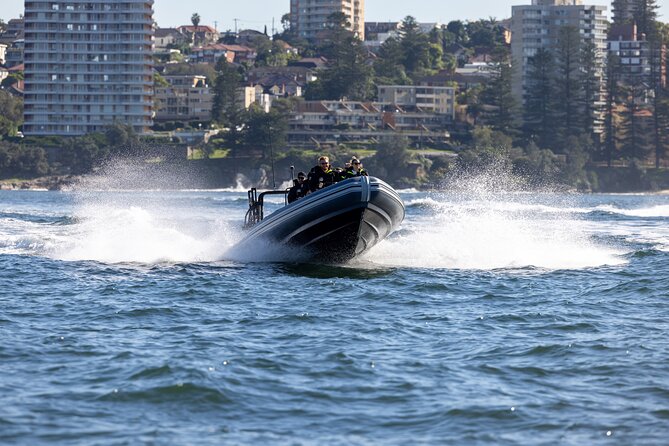
The other big benefit is speed. This is a small RIB built for quick runs, so you’re not stuck slowly cruising while whales are out there somewhere. The whole point is to reach the best hunting ground faster, then use your time where whales actually are.
There’s a trade-off, though. Small RIBs are open-water experiences, so you’ll feel wind and spray more than you would on a larger, more enclosed boat. If you want a fully sheltered ride or you’re very sensitive to motion, you may find the speed and ocean feel a bit more intense than expected. That said, the comfort comes up in feedback, too, with many people saying the ride was smooth.
My advice: treat this as a hands-on, eyes-up wildlife trip. Bring the right layers, stay flexible with conditions, and you’ll get more out of the small-group approach.
You can also read our reviews of more whale watching tours in Sydney

Getting started at Campbells Cove in Circular Quay
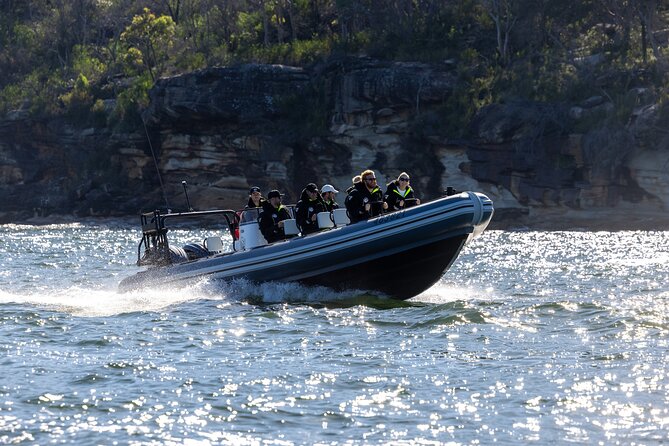
Your adventure begins at Campbells Cove (4 Circular Quay W, The Rocks NSW 2000). It’s a handy launch point because it’s right in the Circular Quay area and near public transport, so you won’t need a car to make the timing work.
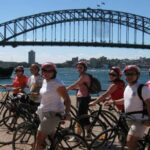
As you depart, you get immediate skyline payoff: you’re in the right place for views of the Sydney Opera House and Harbour Bridge. You also get a classic Sydney “look back” moment when you’re heading out, because the water gives a different angle than streets and viewpoints.
You’ll want to treat the start like part of the experience, not just the setup. The departure portion is short, but it’s still your first chance to get cameras ready and settle in. Also, since the tour uses a mobile ticket, keep your phone charged and ready for quick check-in.
One practical tip: if it’s cool or breezy, don’t wait until you’re already on the water to get comfortable. The RIB moves fast, and wind chill can change quickly once you’re out beyond the harbour. A light windproof layer is often the best insurance.
Harbor landmarks on the way out: Fort Denison and Mrs. Macquarie’s Chair
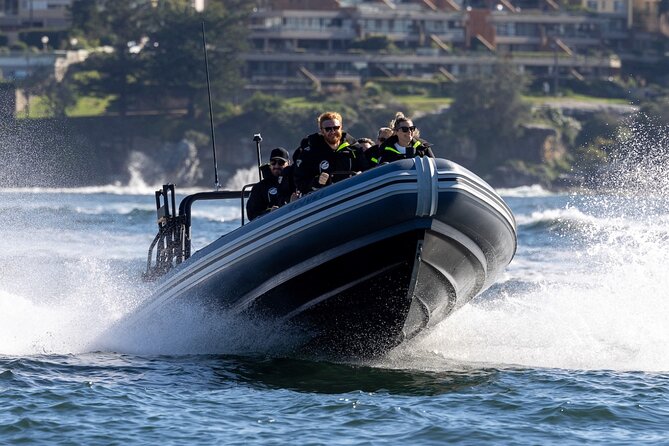
Before you ever reach the open-water search area, you cruise through Sydney Harbour highlights. This portion is brief, but it’s packed with famous landmarks. You pass Fort Denison, glide by the Royal Botanic Garden area, and you’ll see Mrs. Macquarie’s Chair along the harbour foreshore.
Why this matters: it helps break the trip into two phases. First, you get the Sydney postcard scenery while you’re still near the calmer harbour water. Then you transition into the more dramatic, open-ocean portion where the whale-watching gets serious.
It’s also a good time to get your bearings. You’ll be settling into where to stand or sit for the best views, and the crew can often help you understand what to look for once you’re further out. If you’re the kind of person who needs context to feel confident searching the horizon, this scenic cruise does the job.
Photo-wise, this is where you can grab clean angles of the coastline and landmarks without relying on long zoom shots. If the whales are active later, you’ll still want your camera ready, but this stretch makes the trip feel rewarding even before the main event.
Sydney Heads: the moment the ocean takes over
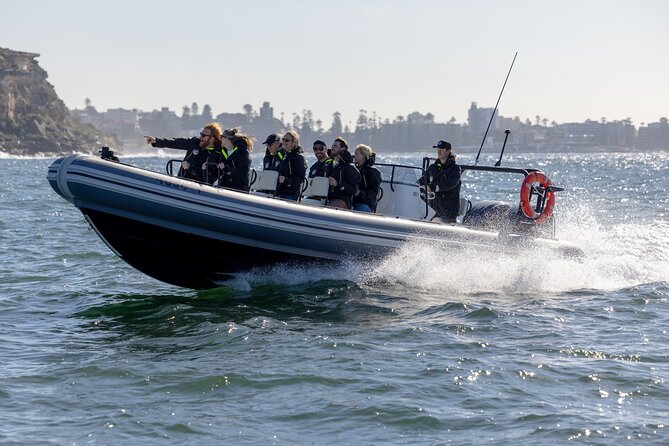
Next comes Sydney Heads, when the RIB heads toward the dramatic cliffs at both North Head and South Head. The time here is short, but you’ll feel it. This is where you transition from “harbour cruise” to “open ocean.”
That change in water conditions matters because it’s tied to where the whales are likely to be. You’re traveling toward the area that gives you access to the prime searching zone, so the heads passage isn’t a random detour. It’s the bridge between city views and wildlife time.
Keep in mind: open ocean travel can feel faster and more exposed. If you’re prone to motion sickness, plan ahead. Even if the ride is reported as smooth, the speed and wind are still part of the RIB experience.
My practical take: use the Sydney Heads segment to get ready mentally. Once you’re out past the heads, your job becomes much more specific—eyes on the waterline and horizon while listening to the crew’s guidance. If you try to multi-task with photos the whole time, you’ll miss the early signs of whale surfacing.
The main event: the whale search area and what to watch for
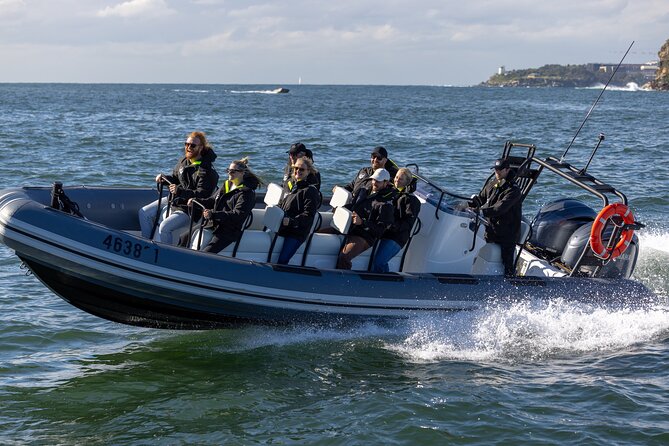
Most of your time is spent in the Whale Watching Search Area, where the crew works to locate whales and other marine wildlife. This is the highlight stretch, with about 85 minutes allocated to searching and watching.
Here’s what you’ll be looking for, based on what the crew teaches: humpback whale behaviors. That means you should watch for:
- Breaching (a whale rises out of the water)
- Tail-slapping
- Spouting (blow and spray)
This matters because spotting is easier when you know what counts. A whale’s surface moment can be brief, and if you’re only looking for a full body, you’ll miss the small signs. When you know the behavior cues, you can recognize activity fast—and that’s when the experience gets exciting.
The small boat layout helps again here. With only 12 people, the crew can position the vessel more effectively and the group can react together without turning into a crowd. You’ll often feel like you’re in the moment with the captain instead of watching from far away.
One more useful detail from standout feedback: you can be given time to stay with active whales. Captain Cassie, in particular, is praised for allowing guests to remain as long as possible during peak whale time. That’s exactly what you want on a wildlife trip—more minutes when the whales show behavior, not fewer.
- Blue Mountains Small-Group Tour from Sydney with Scenic World,Sydney Zoo & Ferry
★ 5.0 · 3,709 reviews





The return run: a fast, scenic wrap-up from the water
After the search portion, you head back. The return journey is a shorter stretch (about 20 minutes), and the pace stays quick. This part is less about scanning and more about soaking in the harbour and coastline views while the RIB zips back toward Circular Quay.
The good news is that it’s still scenic. Even if you’re already a bit whale-saturated, you’ll get that Sydney-from-the-water feeling one last time. The return doesn’t drag, and the timing keeps the whole day from swallowing half your itinerary.
If you’re the type who gets tired easily on tours, this schedule can be a plus. You get a concentrated wildlife block, then you’re done while you still feel energized. That also makes it easier to pair with other Circular Quay-area plans afterward.
If the ocean is choppy, you might feel it more on the way out than the way back, or vice versa, depending on wind and swell. Either way, use the return as a time to settle your clothes, check photos, and warm up with a drink if you planned ahead.
Price and value: what $98.93 really buys you
At $98.93 per person, this isn’t the cheapest way to see whales. But it’s also not priced like a premium “private boat” either. For many people, the value comes from two things: small-group capacity and high-speed access.
A 12-passenger vessel costs more to operate than a larger tour boat, and the speed has real impact. Whale watching depends on being where the action is when it happens. Faster travel to searching zones means you can spend more of your limited tour time where whales are more likely to be.
You’re also paying for an experienced crew who provide commentary about whale behavior and the marine environment. That turns this from a sightseeing ride into a guided wildlife experience. And because it’s smaller, your attention stays on the whales instead of on crowd management.
Booking appears to be popular—often scheduled about 22 days in advance on average. That’s a sign you should plan ahead if you’re traveling in peak whale months or on a short Sydney visit.
If you’re trying to decide between a larger boat and this small RIB, the real question is what you value more: extra onboard comfort and capacity, or more personal spotting time and quicker arrival at the search area. This tour aims at the latter.
Who should book (and who should think twice)
This is a great fit if you:
- Want small-group whale watching with only 12 travelers
- Like a more active, high-speed boat experience
- Enjoy learning what to look for, not just hoping for sightings
- Are happy with a tour that’s about 2 hours total
It’s also a good choice if you’re staying around Circular Quay or The Rocks area and want something that starts right in the middle of your sightseeing.
You might think twice if you:
- Get motion sick easily (the open RIB speed and wind can be a factor)
- Are very sensitive to cold or wet conditions (you’ll feel the ocean air more on a smaller boat)
- Don’t want to plan around weather, since the experience requires good conditions
The tour notes a moderate physical fitness level. That’s a sensible heads-up for an open-boat ride with movement. It doesn’t mean it’s hard-core, but it does mean you should feel comfortable getting into position and holding steady while the vessel moves.
Should you book Ocean Extreme’s small RIB whale watching?
If your goal is a more personal, fast-paced whale-watching experience from Sydney’s harbour, this is an easy yes. The 12-passenger size helps you focus on the whales, and the high-speed approach is designed to put you in the right area sooner. Add in whale behavior guidance—breaching, tail-slapping, spouting—and it turns the trip into more than a random hunt.
Book it especially if you care about the quality of spotting time. Captain Cassie is specifically praised for letting guests stay with active whales as long as possible, which is exactly how you want a wildlife trip to run.
Skip this option if you strongly prefer a sheltered ride or you know you’ll struggle with wind and motion on small boats. Also, keep an eye on conditions because this tour depends on good weather, and that can affect what’s possible on the day.
If you’re choosing one whale-watching experience in Sydney and you want the one that feels closest to the action, this small RIB is a smart pick.
FAQ
How long is the whale watching tour?
It lasts about 2 hours, including the time spent in the whale search area and the return journey.
How many people are on the smallest RIB?
The maximum group size is 12 travelers.
Where do I meet for the tour?
You meet at Campbells Cove, 4 Circular Quay W, The Rocks NSW 2000, Australia.
What whales and marine wildlife are you looking for?
You’re guided to spot humpback whales and other marine wildlife during the search area.
Do I need a printed ticket?
No. The tour uses a mobile ticket.
What’s the cancellation policy if weather is bad?
You can cancel for a full refund up to 24 hours in advance. The experience requires good weather, and if it’s canceled due to poor weather, you’ll be offered a different date or a full refund.
You Might Also Enjoy
More Whale Watching Tours in Sydney
More Tour Reviews in Sydney
- Blue Mountains Small-Group Tour from Sydney with Scenic World,Sydney Zoo & Ferry
★ 5.0 · 3,709 reviews