REVIEW · SYDNEY
Photography Essentials Workshop in Sydney Harbour Foreshore
Book on Viator →Operated by Sydney Photographic Workshops · Bookable on Viator
Sydney Harbour changes when you learn to see it. This Photography Essentials Workshop turns a sightseeing walk into a focused, half-day lesson on how to make stronger photos—taught by Sydney Photographic Workshops with pro instruction you’ll recognize from instructors like Daniel Linnet. You’ll spend time shooting around the Opera House, Harbour Bridge, Circular Quay, and The Rocks, learning how composition and light work together instead of hoping your camera does the thinking for you.
What I like most is the mix of theory and real practice: you learn how to use different camera modes, then put that into action on the streets and foreshore. The second big win is the emphasis on manual mode for creative control—so even if you’re new, you leave knowing what to change and why. One thing to consider first: it is not suitable for compact cameras without full manual capability, so check your camera settings before you book.
In This Review
- Key highlights you’ll actually feel in the photos
- A 4-hour Harbour field lesson, not a classroom marathon
- Your camera primer: modes, lenses, and real control
- Composition and light: the two skills that actually travel with you
- Stop 1: Sydney Opera House and learning to frame a national icon
- Stop 2: Sydney Harbour Bridge and exposure with strong lines
- Stop 3: Circular Quay for practical angles and mixed light
- Stop 4: The Rocks Precinct and the value of character-filled streets
- Price and value: what you’re paying for (and what you’re not)
- Who should book this workshop
- What you should do before you go
- Should you book this Photography Essentials Workshop on the Sydney Harbour Foreshore?
- FAQ
- How long is the photography workshop?
- Where do I meet, and when does it start?
- What stops are included during the workshop?
- Does it end at the same meeting point?
- What cameras is the workshop suitable for?
- Is it suitable for compact cameras?
- Is the workshop dependent on weather?
Key highlights you’ll actually feel in the photos
- Small group size (max 10 travelers) means you’re not lost in the crowd when you have questions
- All camera modes get real-world context, not just menu explanations
- Manual mode coaching helps you get control over exposure and creative results
- Iconic Harbour subjects plus The Rocks give you both famous and more character-filled angles
- Pre-visualising your shot becomes a habit, not a one-time trick
A 4-hour Harbour field lesson, not a classroom marathon
This is a half-day workshop built for learning outdoors, around Sydney’s most recognizable waterfront scenes. The timing matters: with a start at 12:00 pm, you’ll be working through daytime light that can shift quickly around water, stone, and glass. That’s exactly where photography gets tricky—so it’s a good place to train your eyes.
The group stays small, up to 10 travelers, and that changes the experience. You get room to ask questions about your own camera, your own lens setup, and the settings you’re trying to use. If you’ve ever felt ignored in a large group “tour,” this format is easier to learn from.
You also get structure. You’re not just wandering the Sydney Harbour Foreshore—you’re moving through a planned set of stops and learning goals. The workshop is also explicitly designed as a great starting point for beginners, or for anyone who wants to refresh their fundamentals instead of starting from scratch again.
You can also read our reviews of more photography tours in Sydney
Your camera primer: modes, lenses, and real control
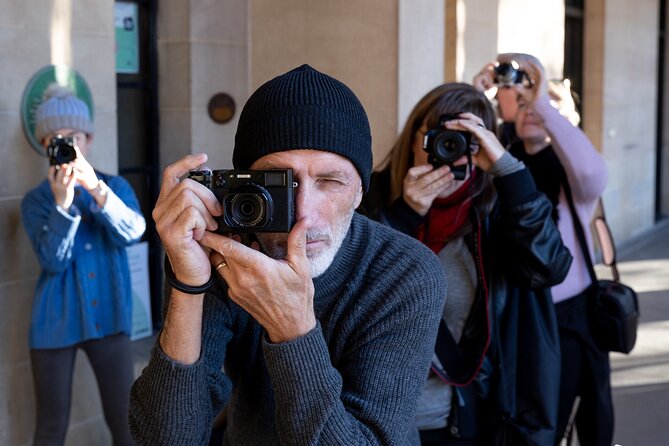
The workshop starts at the beginning—with a camera-and-kit orientation that’s meant to get you past the basics of turning it on and hoping for the best. You’ll cover what different shooting modes are for and how to apply them to essential techniques. That matters because most people switch modes without understanding what they’re controlling.
Then it shifts toward the part that usually creates the biggest “aha” moment: operating in manual mode. You’ll be guided to understand how manual settings translate into your final image, so you can make choices instead of letting the camera guess. The goal isn’t technical trivia. It’s control.
This class also stays practical about gear. It includes an introduction to your camera, lenses, and other essential items that make up a good photographic kit. You’ll want to arrive ready to use what you brought, since the whole point is connecting the teaching to what’s already in your hands.
One important limitation is that it’s suitable for cameras with full manual capability, including SLR and mirrorless. If you’re relying on a compact camera that doesn’t let you operate fully in manual, you’re likely to feel boxed in. This workshop is about making adjustments—so the camera has to allow it.
Composition and light: the two skills that actually travel with you
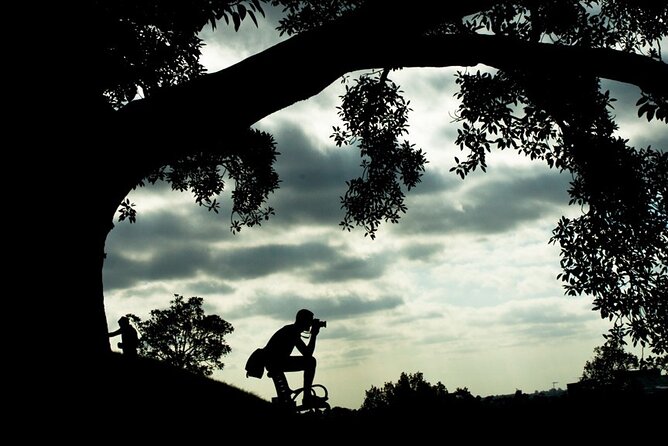
A lot of photography instruction stops at rules. This workshop leans more on something you can apply anywhere: composition and lighting choices. They frame lighting as a main key of photography, and you’ll see why once you’re shooting around the Harbour where light bounces off water and changes fast when you move between shade and brighter open areas.
You’ll also work on simple compositional techniques. The practical version of this is learning to “see” elements before you press the shutter. Instead of collecting random photos, you practice thinking about framing, angle, and how your subject sits in the scene.
There’s also a focus on pre-visualising your photo. That’s a fancy term for a very useful habit: you look first, plan quickly, then shoot with intention. After doing that for a few stops, you start noticing composition everywhere—even when you’re not in “training mode.”
Stop 1: Sydney Opera House and learning to frame a national icon
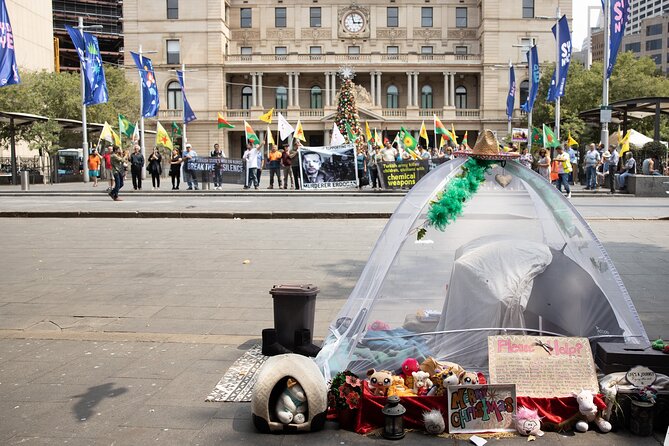
The day begins at Sydney Opera House, which is a smart choice for a workshop. It’s dramatic, recognizable, and packed with photographic edges: curves, strong geometry, and lots of potential viewpoints.
Here’s what you’ll likely take from this stop: iconic subjects can be easy to photograph badly. It’s not enough to point and shoot. You need to decide what part of the Opera House matters most in your image and how you want the surrounding space to support it. That’s where composition lessons kick in.
You’ll also deal with lighting challenges that show up instantly in Harbour scenes—bright highlights, shadow areas, and reflections depending on your angle. Even if you’re still learning your manual settings, the Opera House gives you clear feedback. When you adjust exposure and framing, your image changes in an obvious way.
A minor consideration: the Opera House area can be busy. That can slow you down while you wait for a clear angle. In a workshop setting, that’s not a problem to fear—it’s part of learning how to work with real conditions, not ideal ones.
Stop 2: Sydney Harbour Bridge and exposure with strong lines
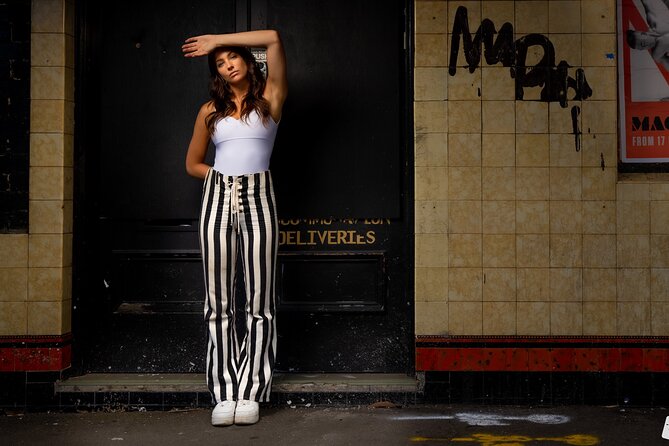
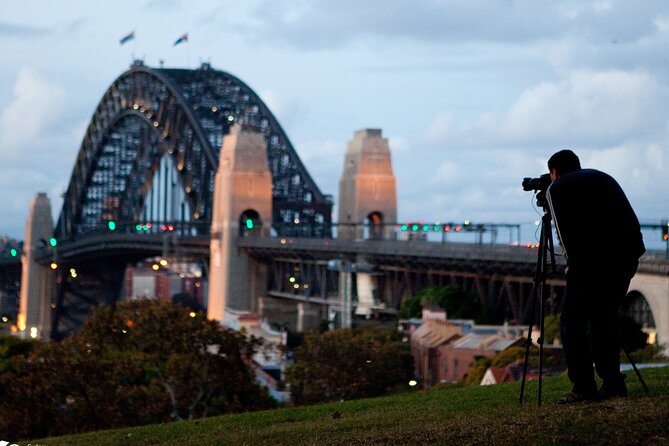
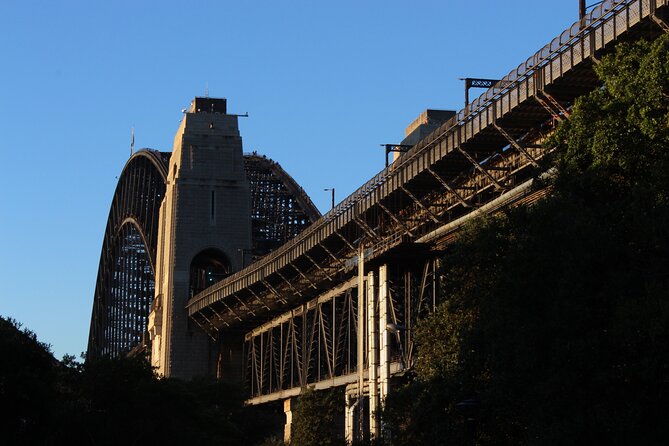
Next up is Sydney Harbour Bridge, another reason this workshop is worth your time. Bridges bring structure: straight lines, repeating elements, and bold geometry. Those features make it easier to practice compositional control.
This is a good stop to work on your exposure thinking. When your subject is high-contrast—bright sky against darker structure, or shadows cutting across metal surfaces—you’ll see why manual mode matters. Small setting changes become visible fast, and you can connect your choices to what you actually capture.
You can also use the Bridge to practice “leading” your viewer through the frame. That might mean aligning lines, choosing a viewpoint that emphasizes the Bridge’s span, or framing with the Harbour and skyline. The workshop encourages that kind of intentional framing instead of collecting random snapshots.
One more thing: the Harbour Bridge often invites wide shots, but the training mindset here helps you explore detail too. Even if the main subject is huge, you can learn composition by shooting smaller sections—like textures, edges, or partial views that still tell a story.
You can also read our reviews of more tours and experiences in Sydney




Stop 3: Circular Quay for practical angles and mixed light
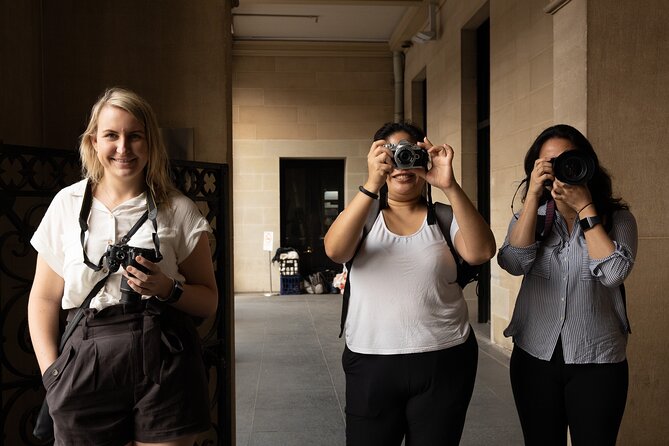
At Circular Quay, the training shifts closer to everyday Sydney. It’s still Harbour-focused, but you’re more likely to face mixed lighting—sun, shade, and reflections depending on where you stand.
This is where the workshop’s approach to moving from theory to practice becomes especially useful. Once you’ve learned the basics of modes and manual control, Circular Quay is a place to apply that learning quickly. You’ll likely find yourself making repeated attempts—changing settings, changing your position, then judging the result.
Circular Quay also gives you a chance to practice storytelling with composition. With the water, the built structures, and the busy feel of the area, you can choose how much context to include. You’re not just photographing the Harbour; you’re deciding how the scene should read.
If you’re working on your pre-visualising habit, this is a good test. The area offers many possible compositions, so you have to choose one, plan it, and then shoot. That discipline is what makes your photos start feeling like yours.
Stop 4: The Rocks Precinct and the value of character-filled streets
The day finishes with The Rocks, and specifically the Rocks Precinct. This is a great contrast to the big-ticket architecture stops. Instead of only photographing iconic landmarks, you get a more lived-in-feeling area that supports different types of photos: textures, angles, and smaller scenes.
Even though the broader day is about essential photography skills, ending here makes the training feel real. You’ve been learning manual control and composition around dramatic subjects. Now you apply those skills to a place with character and variation.
This is also where you benefit if you want more than just “tourist framing.” The Rocks can help you build a portfolio that looks like you explored, not just that you collected famous skyline shots. In workshop terms, it’s another chance to practice your ability to pre-visualise—because you can’t rely only on landmark scale to make your images work.
A practical note: The Harbour Foreshore and surrounding areas involve walking. You don’t need athletic fitness, but the workshop asks for moderate physical fitness. Plan to be on your feet for the half-day.
Price and value: what you’re paying for (and what you’re not)
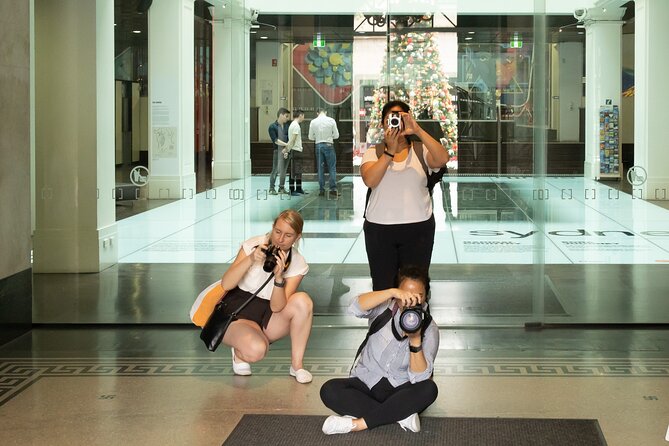
At $107.59 per person for about 4 hours, the value hinges on one thing: instruction quality with targeted outcomes. This isn’t a long “hop-on-hop-off” type activity. It’s a compact workshop with a clear teaching focus: camera modes, manual operation, composition, and light.
You’re also paying for small-group learning (max 10), which can matter more than people expect. When you’re learning manual settings, you need feedback. If you’re stuck guessing, the workshop won’t stick. Small group size makes the learning more efficient.
Another value point: it’s designed for cameras with full manual capability, meaning it’s aligned with the kind of results you want. If you bring a manual-capable camera, you’ll have the tools to put what you learn into practice immediately at each stop.
Where the price might feel less justified is if you own a compact camera that can’t do full manual control. In that case, you’re likely to lose time or struggle to apply the lessons. If you’re on a manual-capable camera, the cost starts making a lot more sense.
Who should book this workshop
You’ll get the most from this experience if any of these describe you:
- You’re a beginner who wants fundamentals taught in a way you can use right away
- You’ve tried learning photography before but want a clear, step-by-step reset
- You use a manual-capable SLR or mirrorless camera and want better control
- You enjoy walking and learning while shooting in real places, not just reading about it
It’s also a good option for people who like structured practice. The workshop is built around stops with a goal, so you’re not left wondering what to do next.
If you only want quick skyline photos with minimal effort, this might feel like more work than you expected. But if you want photos that look more intentional, it’s a strong fit.
What you should do before you go
You don’t need to be a camera wizard, but you should come ready to experiment. Bring your camera with manual capability, and be prepared to adjust settings under guidance. Since the workshop covers camera operation from basics into manual mode, you’ll move faster if you know where your key controls live—even if you’re not comfortable using them yet.
Also, keep your expectations grounded. This is a half-day. You won’t transform into a professional shooter by lunchtime, but you can absolutely start building reliable skills: how to choose settings for lighting, how to improve framing, and how to plan a shot before pressing the shutter.
Finally, be ready for changing conditions. The workshop requires good weather, and Harbour light can change quickly. Dress for the day you get.
Should you book this Photography Essentials Workshop on the Sydney Harbour Foreshore?
If your goal is to improve your photos in a focused way, I think this is an easy “yes,” especially for beginners or anyone who wants a structured refresh. You get pro guidance, a small group, and an itinerary that forces you to practice essential skills across multiple Harbour environments—from Opera House and Bridge structure to Circular Quay’s real-world angles and The Rocks’ street-level texture.
Skip it only if your camera can’t handle full manual control. Otherwise, this is the kind of workshop where the learning is practical and the results build because you’re shooting immediately, not just listening.
FAQ
How long is the photography workshop?
It runs for about 4 hours.
Where do I meet, and when does it start?
You meet at Customs House, 31 Alfred St, Sydney NSW 2000, and the start time is 12:00 pm.
What stops are included during the workshop?
The workshop includes stops at the Sydney Opera House, Sydney Harbour Bridge, Circular Quay, and The Rocks.
Does it end at the same meeting point?
Yes. The activity ends back at the meeting point.
What cameras is the workshop suitable for?
It’s suitable for any camera with full manual capability, including SLR and mirrorless cameras.
Is it suitable for compact cameras?
No. It’s not suitable for compact cameras without full manual capability.
Is the workshop dependent on weather?
Yes. It requires good weather. If it’s canceled due to poor weather, you’ll be offered a different date or a full refund.
You Might Also Enjoy
More Workshops & Classes in Sydney
More Photography Tours in Sydney
More Tour Reviews in Sydney
- Blue Mountains Small-Group Tour from Sydney with Scenic World,Sydney Zoo & Ferry
★ 5.0 · 3,709 reviews