REVIEW · SYDNEY
Sydney Fish Market Behind the Scenes Tour
Book on GetYourGuide →Operated by Sydney Fish Market · Bookable on GetYourGuide
Fish auctions start before sunrise. This 2-hour behind-the-scenes tour of the Sydney Fish Market gets you into a working auction space that’s normally closed and shows you exactly how seafood lands in Australia. I love the sheer scale—this is the largest fish market in the Southern Hemisphere—and I love how the guide makes the whole process feel practical, not touristy.
My second favorite part is the food-industry reality check: you’ll watch the Dutch auction system in action, see over 100 species in the famous blue crates, and even catch live prep like tuna filleting, oyster shucking, and sushi prep. One drawback to plan for up front: it’s early (check-in by 5:50am) and you need to follow the strict footwear rules on the auction floor.
In This Review
- Key things that make this tour worth your time
- Entering Sydney Fish Market’s Working Auction World
- Meeting in the foyer: finding the right start point fast
- Auction-floor rules and why they matter
- Watching the Dutch auction: the system behind fast seafood sales
- Blue crates and 100+ species: seeing how variety really looks
- Live prep demos: tuna filleting, lobsters, sushi prep, oyster shucking
- Price and timing: what $56 gets you in a 2-hour window
- Who should book, and who should skip
- Bottom line: should you book the Sydney Fish Market Behind-the-Scenes Tour?
- FAQ
- How long is the Sydney Fish Market behind-the-scenes tour?
- What does the tour cost?
- Where do I meet the guide?
- What should I wear or bring?
- Is food and drink included?
- Is the tour suitable for kids or wheelchair users?
Key things that make this tour worth your time
- A rare look at the auction floor that’s normally off-limits to the public
- Dutch auction bidding, including how sales move fast with 150+ buyers in the mix
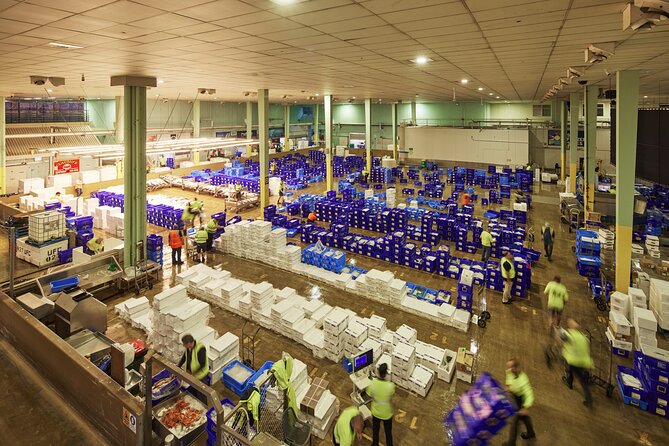
- Over 100 seafood species shown in the famous blue crates
- Live demonstrations such as tuna filleting, oyster shucking, sushi prep, and live lobsters
- Small group size (max 10), which makes the guide’s explanations easier to follow
Entering Sydney Fish Market’s Working Auction World
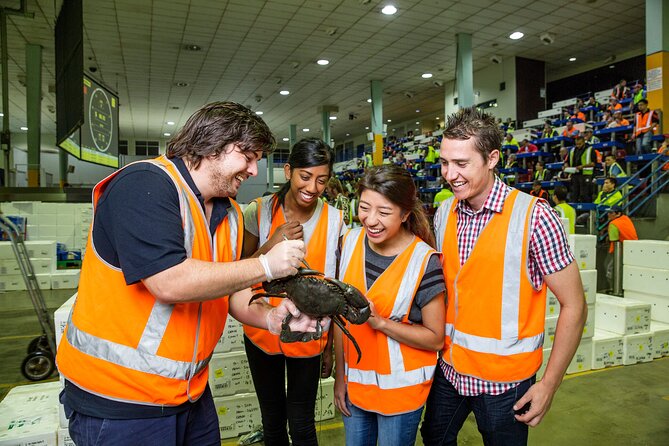
If you’ve ever wondered how seafood moves from ocean to plate, this tour turns that question into a firsthand walkthrough. The Sydney Fish Market is the big hub—largest in the Southern Hemisphere—and it runs on speed, quality checks, and buyers ready to make decisions quickly. That’s the part most people don’t see, and it’s why this experience feels unusually real for a tour.
What I especially like is that it doesn’t just show you seafood as a product. It shows seafood as a system. You’ll spend time on the auction floor and hear how the market handles freshness, variety, and demand, which is a nice reminder that what you order at a restaurant is the end result of a chain of work.
The vibe is practical. People aren’t doing this for spectacle; they’re doing it because they need to sell what just arrived, and they need to sell it correctly. Expect a tight focus on the process: what’s being offered, how quality is assessed, and how the auction works.
You can also read our reviews of more shopping tours in Sydney
Meeting in the foyer: finding the right start point fast
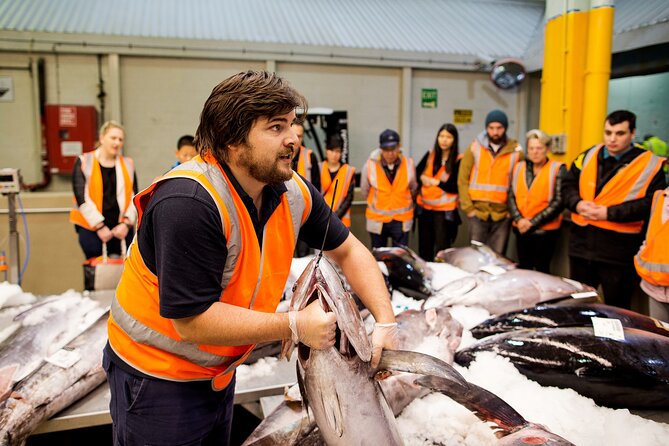
Your first job is getting to the correct area before the tour kicks off. You meet at the LG Information Hub, Sydney Fish Market, 1 Bridge Road, Glebe. It’s on the ground level on the side closest to the city, so you can get oriented quickly when you arrive.
After meeting, you’ll move into the market building and head to where the tour begins. The guidance is straightforward: enter through the glass doors to the left of the arcade entrance, then go up to Level 1 (stairs or lift). You’ll be asked to take a seat on the black couches while you wait for your group to assemble. That waiting moment is useful—good for getting your bearings, and it gives you a second to make sure your shoes and socks are ready for the auction-floor footwear rules.
A small timing note matters here: check-in is required by 5:50am. If you arrive late, you’ll likely lose your chance at getting on the auction floor when the group starts moving.
Auction-floor rules and why they matter
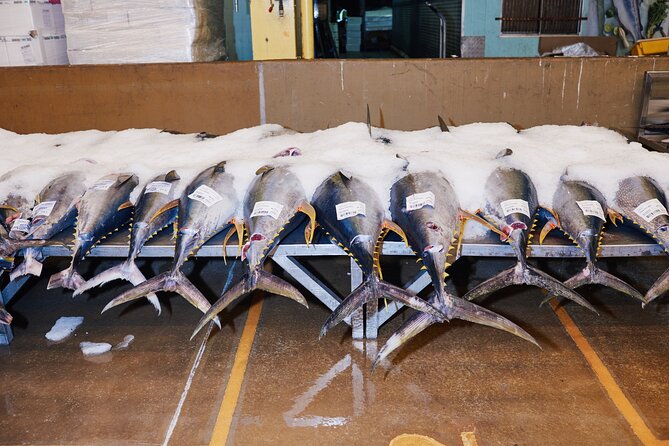
This is a working floor with real safety needs. Before you go in, you’ll be provided safety footwear, and you should plan to wear socks (for comfort with the safety footwear). You’ll also want to bring a jacket because market spaces can feel cool and you’ll be moving around.
You also have to follow the no-nonsense shoe rules. High-heeled shoes, hats, open-toed shoes, and smoking are not allowed. Littering is obviously out too, but the big takeaway is that the tour is designed to let you walk where deliveries and auction activity happen—so they keep it controlled.
If you’re traveling with kids, take note: this tour isn’t suitable for children under 10. And if you’re using a wheelchair, the auction-floor access rules mean it’s not suitable for wheelchair users. Prams and wheelchairs aren’t allowed on the auction floor, so this is best approached as an active, standing-and-walking experience.
One more practical point: I’d treat this as an early-morning leg workout disguised as food sightseeing. Comfortable shoes matter more than you think when you’re standing and moving through a dense, busy environment.
Watching the Dutch auction: the system behind fast seafood sales
The headline learning moment is the Dutch auction system, and it’s the reason this tour feels more than a simple walk-and-look. In a Dutch auction, the price changes and buyers respond—so you get a feel for how a market prevents delays and keeps seafood moving while it’s fresh and still in demand. It’s not slow bargaining; it’s efficient decision-making.
Here’s what makes that explanation click for me: the market isn’t selling one fish at a time. It’s selling volume. You’ll see seafood being sold to 150+ buyers, with more than 50 tonnes of seafood passing through this kind of auction process. Hearing that number while you stand in the action makes the scale feel less abstract.
You’ll also learn about the quality checking that happens before goods move on. That’s important because the market isn’t only about price; it’s about sorting what’s best and matching it to what buyers need. One guide with an experienced fisherman background—names like Mark or Mike have led tours—brings credibility to that part, especially when explaining what quality checks mean in real terms.
If you love food details, this is where the tour rewards you most. You stop thinking of seafood as a menu item and start thinking of it as inventory with deadlines.
Blue crates and 100+ species: seeing how variety really looks
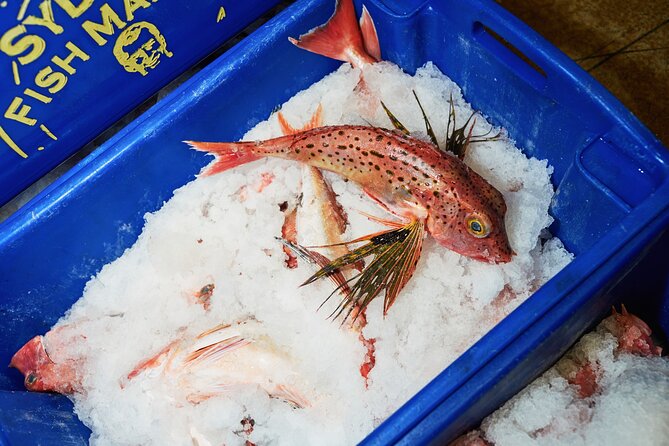
One of the most fun parts of this tour is simply seeing the range of seafood. You’ll encounter over 100 seafood species displayed in the famous blue crates. Some are fan favorites you’ll recognize. Others are the weird and wonderful options most people never order—species you’d miss completely if you only shop at standard supermarkets or rely on restaurant specials.
What I like about this setup is that it doesn’t force seafood into a single familiar category. It shows variety as normal. You begin to understand that Australian seafood isn’t just a few staples; it’s a huge range of species moving through a working marketplace.
And this is also a subtle lesson in how seafood knowledge can change quickly once you see the real lineup. You might spot unfamiliar names and shapes and then connect those to what you learn on the floor. The tour experience is basically a guided shortcut from ignorance to recognition, without pretending you need to become an expert overnight.
You can also read our reviews of more tours and experiences in Sydney

Live prep demos: tuna filleting, lobsters, sushi prep, oyster shucking
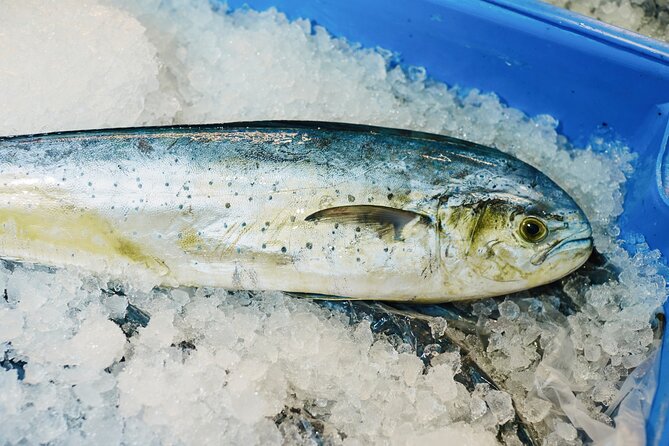
The live demonstrations are where the tour turns into something you remember. You’ll watch seafood prep like tuna filleting, see live lobsters, and also get to observe sushi prep and oyster shucking as part of the tour experience.
These demos do more than entertain. They help you understand why different seafood is handled differently and why a market cares about speed and skill. For example, tuna filleting isn’t just cutting—it’s about turning fresh product into workable portions. Oyster shucking isn’t just opening shells—it’s about extracting edible product efficiently and safely.
This is also a great section if you’re traveling with someone who doesn’t want a purely lecture-style experience. Watching skilled hands work while you learn market context makes the whole thing feel balanced. You’ll leave with a stronger sense of how preparation links back to what’s sold on the auction floor.
One more practical note: if you have a sensitive stomach, seafood prep is normal culinary work, but it is hands-on and close up. Keep that in mind if you prefer gentler sightseeing.
Price and timing: what $56 gets you in a 2-hour window
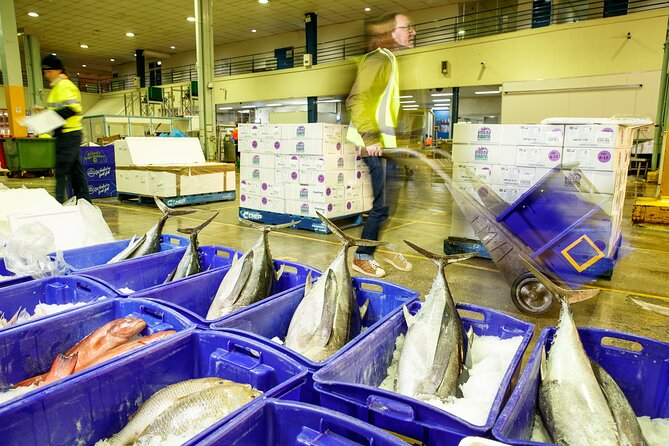
At $56 per person for a 2-hour tour, the value comes from what’s included rather than from food tasting. This price covers the guided market experience, safety footwear for the auction floor, and live seafood preparation demonstrations. Food and drinks are not included, so you’ll want to plan your own breakfast or follow-up meal.
Is it a bargain? It depends on what you want from your trip. If you’re the type who enjoys learning how systems work—how markets function, how buyers decide, how quality gets checked—this price makes sense. You’re paying for access to a closed working space plus explanation plus demonstrations, not for a meal.
If your main travel goal is eating your way through a neighborhood, you might feel the tour is more educational than snack-heavy. But even then, the opportunity to see Dutch auction sales and 100+ species in a live working environment is hard to replace with a standard food tour.
Group size is also part of the value equation. Limited to 10 participants, it stays personal enough for questions and keeps the group moving at an auction-floor pace.
Who should book, and who should skip
This tour is ideal if you’re curious about food before it reaches the plate. I think you’ll enjoy it most if you’re into seafood, want real-world market insight, or like watching live work rather than only browsing stalls.
It’s also a good fit for food geeks and people who like practical facts: auction mechanics, species variety, quality checks, and how live preparation connects to what gets sold. If you’re traveling with friends who can’t decide between food and “how things work,” this tour covers both.
On the other hand, skip it if you need wheelchair access to the auction floor or if your plans require bringing a pram. It’s also not suitable for children under 10. And if you hate early mornings, remember the check-in is by 5:50am.
Bottom line: should you book the Sydney Fish Market Behind-the-Scenes Tour?
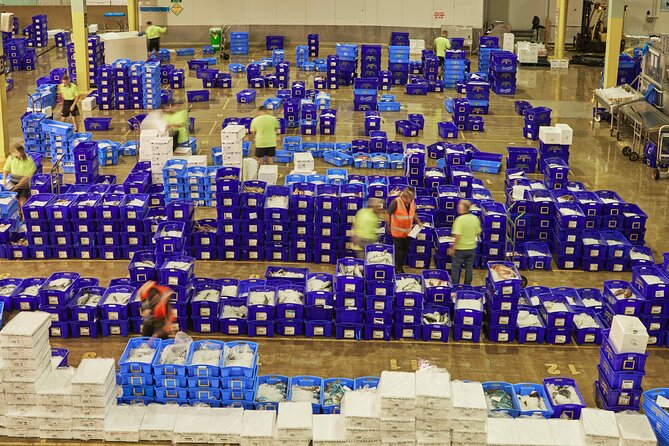
I’d book this tour if you want a hands-on look at how seafood is marketed, sorted, sold, and prepared. The combination of the auction-floor access, the Dutch auction explanation, and the live tuna and seafood prep makes it feel unusually connected—from buyers to product to handling.
You should also book it if you like authentic places that function as workplaces, not just photo stops. You’ll be walking through the real flow of seafood sales, with a guide who can explain what you’re seeing.
If you prefer slow, leisurely attractions—or if you don’t want to follow footwear and facility rules—then you might find it less comfortable than other sightseeing options. But for the right traveler, this is one of those experiences that turns your everyday seafood habit into a story you can actually picture.
FAQ
How long is the Sydney Fish Market behind-the-scenes tour?
It lasts 2 hours.
What does the tour cost?
The price is $56 per person.
Where do I meet the guide?
You meet at the LG Information Hub at Sydney Fish Market, 1 Bridge Road, Glebe (ground level, on the side closest to the city).
What should I wear or bring?
Wear comfortable shoes and bring socks and a jacket. You will also receive safety footwear for the auction floor.
Is food and drink included?
No. Food and drinks are not included.
Is the tour suitable for kids or wheelchair users?
It isn’t suitable for children under 10, and wheelchair users are not suitable for the tour. Prams are also not allowed on the auction floor.
You Might Also Enjoy
More Shopping Tours in Sydney
More Tours in Sydney
- Blue Mountains Small-Group Tour from Sydney with Scenic World,Sydney Zoo & Ferry
★ 5.0 · 3,709 reviews


More Tour Reviews in Sydney
- Blue Mountains Small-Group Tour from Sydney with Scenic World,Sydney Zoo & Ferry
★ 5.0 · 3,709 reviews