REVIEW · SYDNEY
Western Sydney: Junior Tree Ropes Courses
Book on GetYourGuide →Operated by Treetops Adventure Western Sydney · Bookable on GetYourGuide
Treetops, but for tiny climbers. Western Sydney Parklands turns a ropes adventure into a Junior Tree Ropes try-out for kids aged 3 to 7, with grown-ups supervising from the ground. It’s the kind of activity that makes coordination feel like play, not homework.
I like that the courses are built specifically for younger bodies and shorter heights, so the whole thing feels reachable. I also love the “keep moving” style: there are four junior courses, with challenges like wobbly bridges, swinging logs, and mini ziplines, plus instructors and continuous safety systems.
One thing to keep in mind: the youngest kids may have fewer stages available, and even then some 3-year-olds might be unsure at first. Plan for a little hesitation, and come with patience (and water).
In This Review
- Key things I’d bet on before you go
- Western Sydney Parklands treetop play: what you’re actually buying
- What “continuous safety” means for parents (and why it matters)
- Four Junior Tree Ropes Courses: what the kids do up there
- Course elements that build confidence
- Mini ziplines for the “I did it” moment
- Built for short attention spans and first-timers
- The “stages” reality for the youngest kids
- Your 150 minutes: how the timing usually plays out
- The adult role: watch, encourage, and stay calm
- Wildlife and fresh-air bonus: why this setting feels better than a gym
- What to bring (and what I’d prep the night before)
- Price and value: is $26 worth 150 minutes?
- Who should book this junior treetop course
- Should you book Western Sydney Junior Tree Ropes Courses?
- FAQ
- What age is the Junior Tree Ropes Course for?
- How long is the experience?
- Where do we check in?
- What is included in the ticket price?
- Do we need to bring food or drinks?
- What should we bring for the course?
- Can adults climb the course?
Key things I’d bet on before you go
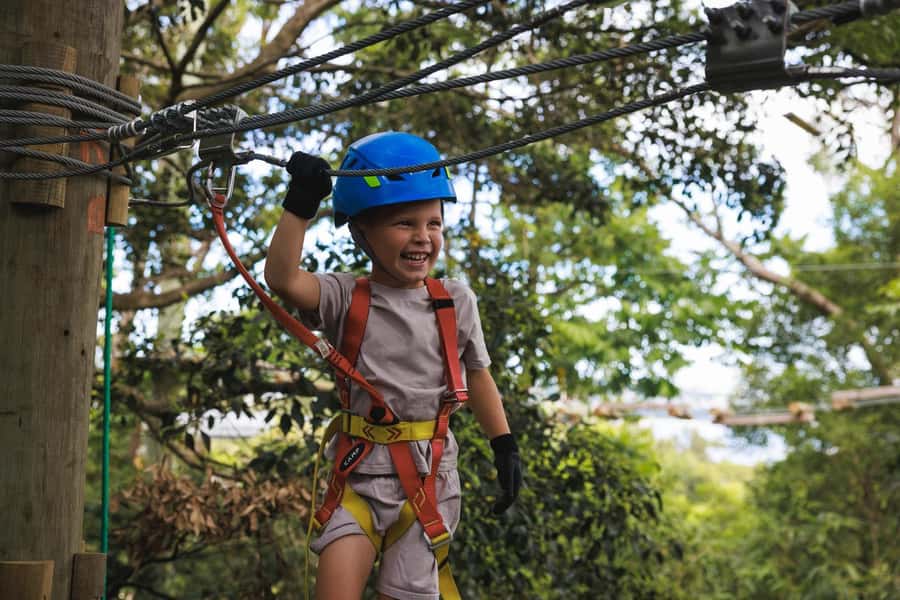
- Four kid-sized courses tailored to ages 3–7, with obstacles like bridges, logs, and mini ziplines
- Continuous safety systems and safety gear, so you can relax while your child climbs
- Adult supervision from the ground, not a drop-off where you lose track
- Fresh air, trees, and wildlife moments like kookaburras
- Small groups (up to 10 participants), which helps kids get support and pacing
- A 150-minute session that gives enough time to actually do the challenges
Western Sydney Parklands treetop play: what you’re actually buying
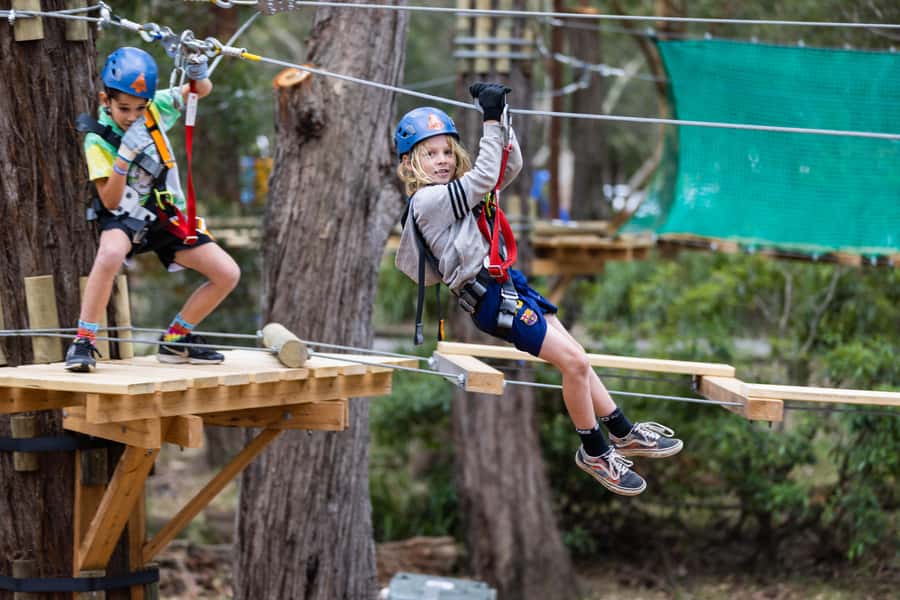
This isn’t an adult ropes course scaled down. It’s a kid-first design that aims at confidence and coordination for ages 3 to 7. You’re paying for a structured 150-minute window where your child gets guided access to a set of treetop elements that fit their age and ability level.
Your start point is the Treetops Adventure reception at Western Sydney Parklands. From there, the experience focuses on movement: balance, climbing, swinging, and short bursts of thrill—without the big, high-stakes feeling that can overwhelm younger kids. If your child is the type who gets excited by playground equipment but still needs support on new challenges, this format is a good match.
Also, you’re not just buying obstacles. You’re buying the safety briefing, safety equipment, and friendly instructors included in the price—so you’re not piecing together how to do it yourself.
You can also read our reviews of more tours and experiences in Sydney.

What “continuous safety” means for parents (and why it matters)
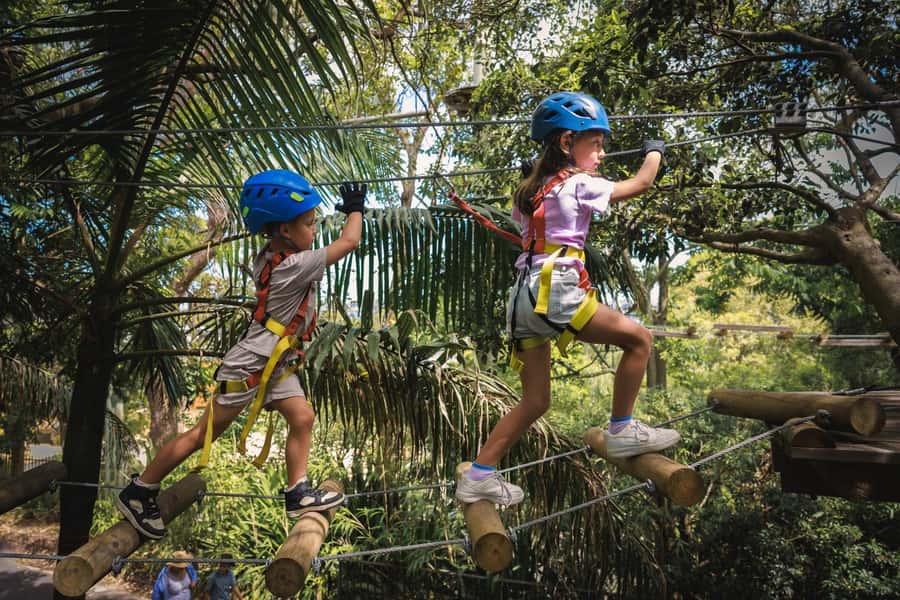
The single biggest reason this works for younger kids is that safety isn’t something you only get at the start. The courses use continuous safety systems, and instructors are there while kids work through the activities.
That matters because kids aren’t calm, consistent, and perfectly aware of physics like adults are. They’re curious. They wobble. They might freeze for a second when they reach the next section. Continuous safety systems are meant for that reality—so your child can try, reset, and continue instead of the whole experience becoming a constant worry.
You’ll also be able to watch from the ground. Adults are meant to supervise rather than be strapped in. That keeps the focus on your child’s progress and gives you a clear view of how they’re doing, especially at the earlier stages.
Four Junior Tree Ropes Courses: what the kids do up there
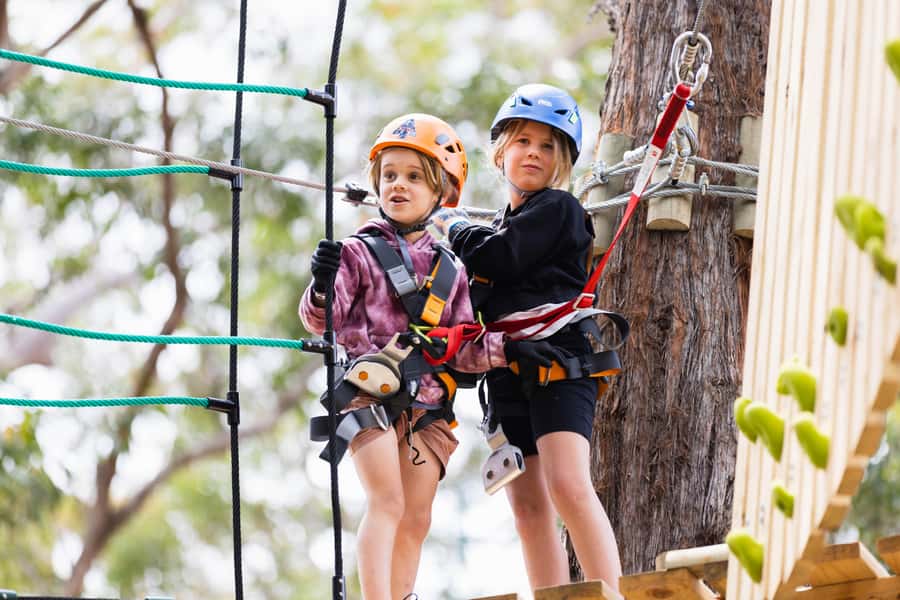
You’ll move through four specially designed Junior Tree Ropes Courses during your 150 minutes. The exact order can vary by group flow, but the idea is the same: short, age-appropriate challenges that stack into a fun “treetop circuit.”
Here’s what you can expect the activities to feel like:
Course elements that build confidence
Kids get time on obstacles like wobbly bridges and swinging logs. These are great for balance and body control because they force small adjustments. For a young child, that can be more meaningful than running around on the ground—because they learn what it feels like to stay steady while the surface moves.
Mini ziplines for the “I did it” moment
A mini zipline is part of the junior set. It’s the thrill hit that helps kids connect effort with a payoff. Even if your child is nervous at the start, a short zipline can be the moment they realize the height isn’t the scary part—the skills are.
- Blue Mountains Small-Group Tour from Sydney with Scenic World,Sydney Zoo & Ferry
★ 5.0 · 3,709 reviews

Built for short attention spans and first-timers
The courses are designed with lower heights and junior proportions. Translation: you’re not trying to convince a 3-to-7-year-old to conquer something that feels physically too big. The goal is that they get enough success experiences to want to try the next section.
The “stages” reality for the youngest kids
One practical note from the experience style: for 3 and 4-year-olds, there may be only two stages available in practice. That’s not a problem with the venue—it’s simply how kid-sized programming works. If you’re bringing a very young 3-year-old, expect a shorter menu of challenges compared with older kids.
Your 150 minutes: how the timing usually plays out
A 150-minute session sounds long on paper, but kids use time differently than adults do. In a good ropes setup, the time is spent in three buckets:
First, there’s the safety briefing and getting kitted out. You’ll want to arrive 15 minutes before your booked time so the briefing runs smoothly and your child can get oriented without rushing.
Second, there’s the actual course time—working through the four junior courses. Because it’s designed for younger adventurers, expect slower pacing than an adult course. Kids often need a bit more encouragement, and instructors guide them through safe movement.
Third, there’s the wrap-up and exit flow. You won’t be out the door the second you finish the last obstacle. The session holds together as an activity, not a quick photo op.
You’ll also want to factor in that kids may need breaks. If they’re tired, hungry, or just had a moment of fear, a short reset helps. Food and drinks aren’t included, so bring water and plan to manage energy yourself.
The adult role: watch, encourage, and stay calm
Adults supervise from the ground. That setup is quietly important. If you’re hovering, steady, and positive, kids feed off that. If you’re tense, they feel it.
So how should you do it?
- Focus on encouragement rather than coaching every movement.
- Praise effort and small wins, not just finishing.
- Give them the space to try without taking over their hands.
This is also where being present helps. With small groups (limited to 10 participants), you get enough clarity to see what’s going on, even if you’re supervising a younger child who isn’t moving at the same pace as everyone else.
Wildlife and fresh-air bonus: why this setting feels better than a gym
Western Sydney Parklands brings more than scenery. Kids are doing ropes work, but they’re doing it in open natural surroundings, with a real sense of outdoors. Fresh air changes the mood, and it also makes the whole experience feel like an outing, not a purchase you regret the moment you arrive.
There’s even a good chance of spotting kookaburras. It’s not the main point, but it’s a nice little hook for kids who like nature questions. If you’re traveling with someone who loves animals, this setting can turn the session into a mini treasure hunt as they look around between challenges.
What to bring (and what I’d prep the night before)
This is one of those activities where the wrong gear makes everything harder. The basics are clear, and you should follow them.
Bring:
- Comfortable shoes (closed-toe is required)
- A sun hat
- Sunscreen
- Water
- Insect repellent
Wear:
- Comfortable clothing that allows movement
If you’re planning ahead, it helps to:
- Put sunscreen on early, before the start rush.
- Make sure shoes stay tied or secure—kids climb and swing, so loose footwear is annoying at best.
Also, it’s not suitable for everyone. It’s not suitable for children under 3, and it’s also not listed as appropriate for pregnant women or people with mobility impairments. If you’re unsure, check with the provider rather than guessing.
And please remember: smoking isn’t allowed.
Price and value: is $26 worth 150 minutes?
At $26 per person for 150 minutes, the value comes from three things you’d otherwise pay for separately: structured instruction, safety equipment, and multiple course elements.
You’re not just buying a ticket to access one small activity. You’re getting:
- Four junior courses
- Safety equipment and a safety briefing
- Friendly instructors
Food and drinks are not included, and transportation isn’t included either, so plan for that part of your budget. But the core adventure package is relatively straightforward: pay for the session, bring supplies, and your child gets a guided treetop experience with continuous safety systems.
If your kid is between 3 and 7 and you want a first ropes experience that builds coordination without pushing them into extreme heights, this pricing structure makes sense.
Who should book this junior treetop course
I’d book it if:
- Your child is age 3–7 and curious about climbing, bridges, and playground adventure
- You want a safe, supervised introduction to heights and movement challenges
- You prefer a small group setting where instructors can help as kids pause, wobble, and try again
I’d think twice if:
- Your child is easily distressed by new settings and needs very long acclimation
- You’re traveling with mobility limitations that fall outside the activity’s suitability guidelines
- You’re hoping for a full “grown-up adventure” where you climb too (adults are there to supervise)
And yes—some kids may be unsure at first. That’s normal. The design is meant to support a first-timer experience, not force bravery like it’s a test.
Should you book Western Sydney Junior Tree Ropes Courses?
If your goal is a confidence-building outdoor activity for kids aged 3 to 7, I think this is a strong yes. The combination of kid-sized heights, four courses, and continuous safety systems makes it feel like an adventure that’s been thought through for little bodies.
Book it if you can show up on time for the briefing, bring the basics (shoes, hat, sunscreen, water), and go in expecting that the youngest kids might do fewer stages. With that mindset, you’ll likely get exactly what the experience is set up to deliver: a first treetop win, with you watching from the ground and cheering at all the small moments.
FAQ
What age is the Junior Tree Ropes Course for?
It’s designed for children aged 3 to 7.
How long is the experience?
The duration is 150 minutes.
Where do we check in?
Check in at Treetops Adventure reception.
What is included in the ticket price?
The Junior Tree Ropes Courses, safety equipment and briefing, and friendly instructors are included.
Do we need to bring food or drinks?
Food and drinks are not included, so you’ll need to plan your own.
What should we bring for the course?
Bring comfortable closed-toe shoes, a sun hat, sunscreen, water, and insect repellent.
Can adults climb the course?
Adults are described as supervising from the ground.
You Might Also Enjoy

More Tour Reviews in Sydney
- Blue Mountains Small-Group Tour from Sydney with Scenic World,Sydney Zoo & Ferry
★ 5.0 · 3,709 reviews