REVIEW · BLUE MOUNTAINS
Small-Group Weekend Rock Climbing Adventure from Katoomba
Book on Viator →Operated by Australian School Of Mountaineering · Bookable on Viator
Rope skills on Blue Mountains rock beats the gym every time.
This two-day small-group course is built for beginners, so you start with safety, belaying, and abseiling basics, then you move onto real climbs with graduated routes suited to your level. I like that it is not just theory time. You get guided practice and then actual climbing, so you leave with more than confidence-they can’t take that away from you.
The main consideration: this is hands-on physical training. You need moderate fitness and a willingness to work on ropes, knots, and controlled descents. If you know you hate being harnessed and hanging on, this might be more stressful than fun.
In This Review
- What You’ll Love Most (and What to Watch For)
- Two Days of Real-World Rock Skills in Katoomba
- Day 1: Safety Awareness, Belaying, Knots, and Your First Abseils
- Day 2: More Climbing, More Variety, and Growing Confidence
- How the Small Group Makes the Weekend Better
- Price and Value: What You’re Really Paying For
- Meeting Point, Timing, and How the Day Feels
- What to Bring (and What’s Taken Care Of)
- Who This Weekend Course Is Best For
- Should You Book This Rock Climbing Weekend From Katoomba?
- FAQ
- How long is the Small-Group Weekend Rock Climbing Adventure?
- Where do I meet in Katoomba?
- Do I need previous outdoor climbing experience?
- What skills will I learn during the weekend?
- Is equipment and lunch included in the price?
- What are the age and fitness requirements?
- What happens if weather is bad or I need to cancel?
What You’ll Love Most (and What to Watch For)
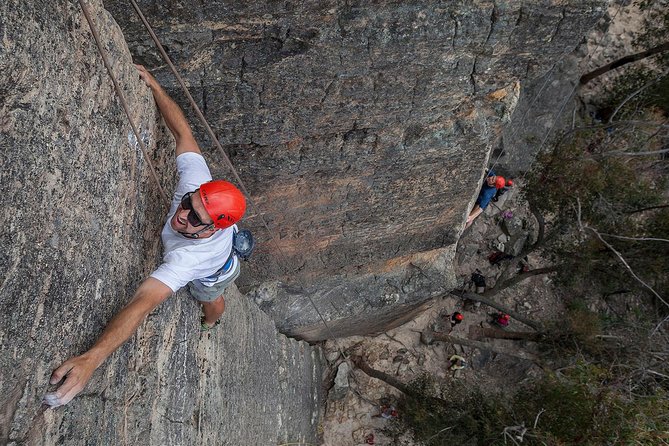
- Beginner-friendly route pacing: You learn in steps, then climb on real rock as your control improves.
- World-standard safety skills: You get drilled on rope handling, knots, belay anchors, and correct belay technique.
- Abseiling training early: You learn safe movement and descent skills, then build on them.
- A lot of climbing time on Day 2: The second day is designed to maximize varied climbs and skill growth.
- Certified instruction in a small group: Maximum group size is 15, so you are not lost in a crowd.
- Equipment and lunch included: Helmets, harnesses, ropes, hardware, and shoes are supplied, plus lunch each day.
Two Days of Real-World Rock Skills in Katoomba
Katoomba sits right on the edge of the Blue Mountains climbing playground. The course uses that advantage well. You start at the Paddy Pallin Adventure Center in Katoomba at 8:45am, then head out by vehicle to the training rock area. From the start, the teaching plan is simple: learn safety fundamentals first, then get onto the rock quickly so you can connect technique to the climbing itself.
What makes this kind of weekend course worth your time is that outdoor climbing has real variables. Rock texture changes. Rope angles matter. Your body has to stay calm while you manage equipment and movement. This course treats those details as part of learning, not as surprises you should just endure.
Also, the course is designed as a bridge from indoor climbing to outdoors. If you climb in a gym, you already know how to read holds and how to breathe through effort. The missing piece is the rope system: belaying correctly, tying the right knots, setting reliable anchors, and moving safely on uneven ground where a mistake can be costly.
You can also read our reviews of more tours and experiences in Blue Mountains.


Day 1: Safety Awareness, Belaying, Knots, and Your First Abseils
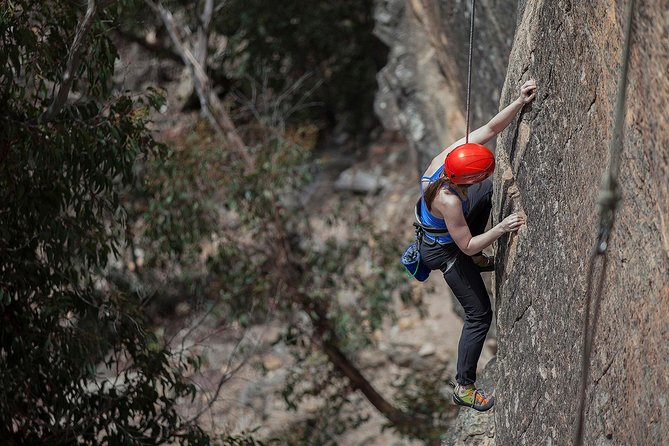
Day 1 is all about control. You start with safety awareness and belaying skills, then move straight onto rock to practice what you just learned. This is where a good instructor makes the difference between okay and truly confident.
Here’s what you should expect to train:
- Safe movement on rock
- Using climbing equipment correctly, not just wearing it
- Efficient use of holds and footholds so you waste less energy
- Rope handling and what to watch for before you climb
- Tying knots as part of a reliable system
- Belay anchors and how to set them with intention
- Correct belay technique so you and your partner are protected
- Abseiling basics, including safe technique and descent control
- Extra techniques that build climbing balance and rope comfort
A big plus is that instructors use a graduated approach. That means you do not jump from zero to scary. You progress through drills and then climbs tailored to the group. In the experiences shared from ASM instructors, guides such as Scott, Liam, Pedro, Zuza, and Lewis are repeatedly described as patient, safety-focused, and willing to adjust the day to match your grade and comfort level. You can’t assume you’ll get the exact same person every time, but it does signal the training culture you’ll likely benefit from.
You will also get hands-on practice selecting modern abseiling and rockclimbing equipment. That matters because outdoor gear is not just “stuff you put on.” It is part of the safety system. Learning how to think about it helps you avoid the common beginner mistake of treating equipment like magic rather than a set of checks you can understand.
Day 1 ends with you feeling the system click. You start to realize that once your rope and belay steps are solid, climbing gets freer. You stop guessing and start executing.
Day 2: More Climbing, More Variety, and Growing Confidence

Day 2 is built for the fun part: climbing. After you’ve trained the basics on Day 1, the second day shifts toward simple joys—more varied climbs, more time on the rock, and more opportunities to develop technique while you are actually climbing.
The goal is very practical. Your instructor aims to take you on as many different climbs as possible, focused on:
- building climbing technique through repeated route styles
- practicing decision-making on real rock
- developing control on rope systems you already learned
- climbing with experienced leaders on short, moderately graded routes when the skills are in place
If you learn best by doing, this format helps. It also reduces the “one and done” feeling you get from short try-it experiences. Instead of a single climb and a photo, you get repeated chances to improve.
One theme that comes through in people’s experiences with ASM courses is that instruction keeps adapting to the group. Guides are described as adjusting routes to your abilities and pushing you just enough without making it miserable. That balance is what you want from a beginner course: you feel challenged, but you’re not dragged into routes that fight your fundamentals.
How the Small Group Makes the Weekend Better

This course keeps the group small: maximum of 15 travelers. For outdoor rope work, that size matters. In a big group, you spend time waiting. In a small group, the instructor can correct your belay technique, check knots, and watch your movement on the rock before problems turn into habits.
You also get a more personal rhythm. If you are slower with knots, your instructor can slow down. If you pick things up fast, you usually get more climbing opportunities as the day progresses.
And you can see why parents and teens like this style. Multiple experiences mention young climbers gaining independence with a safety-first approach. That doesn’t mean it is babysitting-free, but it does suggest that the instructors teach the process clearly enough that participants can take ownership of it.
Price and Value: What You’re Really Paying For
At $394.48 per person for about 2 days, it is not a cheap “try it” activity. But it is also not just paying for a day pass to rock.
You are paying for:
- a professional guide (certified climbing instructors)
- all technical equipment (ropes, helmets, harnesses, and technical hardware, plus climbing shoes)
- lunch each day
- National Park fees
- GST
When you break it down, the value is strongest if you do not already own climbing footwear, a harness setup, rope/hardware experience, and the skills to use it correctly. In other words, you are buying instruction plus safety gear plus access, not just a location.
The “included” list also matters because it removes a big beginner headache. You do not need to figure out rentals, match sizes, or wonder if you grabbed the wrong gear. The course supplies it and teaches you how to use it.
There is one practical note: drinks are not included unless specified. You will want to plan around that and use lunch time to top up.

Meeting Point, Timing, and How the Day Feels
You meet at 166 Katoomba St, Katoomba NSW 2780, at 8:45am at the Paddy Pallin Adventure Center. The day starts with a vehicle ride to the training area, then you are on the rock quickly.
The course runs each day from Katoomba and finishes back at the meeting point. There is no hotel pickup and drop-off, so plan your arrival and return to the city on your own.
Because you are outdoors, weather plays a role. The experience requires good weather. If conditions force a change, you’ll be offered a different date or a full refund.
In a weekend course, this can affect your expectations. It is still usually a worthwhile plan, just stay flexible in your calendar. Also pack like you will be moving: you will be climbing, handling rope, and walking between spots.
What to Bring (and What’s Taken Care Of)

Good news first: the course includes the heavy logistics. You get helmets, harnesses, ropes, technical hardware, and climbing shoes. You also get lunch on both days.
Based on what the course provides, you can keep your packing list simple. You will still want your own basics, likely including:
- comfortable clothing for climbing
- weather-appropriate outer layers
- sturdy footwear for walking approach areas (even if you climb in supplied shoes)
- a water bottle for between breaks
- any personal items you need during meals
If you have dietary needs, tell the organizers when you book. Lunch is included, so they can plan around allergies or special requirements.
Also, the minimum age is 14, and children must be accompanied by an adult. If you are traveling as a family, this course is clearly structured for teen participation with proper supervision.
Who This Weekend Course Is Best For

This is a beginner-to-beginner-plus course, not a hardcore lead-climbing boot camp. It fits best if you:
- are new to outdoor climbing and want the safety system taught properly
- climb indoors and want to transfer those skills to the real rock environment
- want to learn abseiling in a controlled, instructor-led way
- prefer a small group so you get attention and corrections
- want lots of climbing time over two days, not just a one-try overview
It is also a great stepping stone for people who want to be able to climb with experienced leaders afterward on short, moderately graded routes. That is a realistic goal when you learn the basics correctly and then get enough practice to retain them.
If you are already very comfortable with ropes, you might still enjoy it, but you are likely to get more value from an advanced progression course where you focus on more technical lead systems. This one is specifically designed for first outdoor exposure or the indoor-to-outdoor transition.
Should You Book This Rock Climbing Weekend From Katoomba?
Yes—if you want a structured, safety-first start to outdoor climbing and you value instruction that turns into real rope competence. The best sign is the combination of rigorous fundamentals (belay technique, knots, anchors, abseiling) with real climbing time and route progression.
I’d especially recommend it if you:
- feel comfortable climbing in a gym but want the rope skills handled the right way
- want an outdoor weekend that is active and skill-building
- like the idea of small-group attention and multiple climbs in one weekend
Skip it (or consider a different format) if you know you struggle with moderate fitness demands or you strongly dislike being on ropes. The course is safe and taught step-by-step, but it is still a hands-on outdoor training day.
FAQ
How long is the Small-Group Weekend Rock Climbing Adventure?
The course runs for 2 days (about 2 days).
Where do I meet in Katoomba?
You meet at 166 Katoomba St, Katoomba NSW 2780, at the Paddy Pallin Adventure Center. The start time is 8:45am, and the activity ends back at the meeting point.
Do I need previous outdoor climbing experience?
No. The course is designed for participants with little or no previous outdoor climbing experience, and it is also a good transition from indoor climbing.
What skills will I learn during the weekend?
You’ll train belaying, rope handling, tying knots, belay anchors, and abseiling, along with fundamentals like safe movement on rock, using holds and footholds, and learning how to select and use climbing equipment.
Is equipment and lunch included in the price?
Yes. The fee includes all technical equipment (including ropes, helmets, harnesses, technical hardware, and climbing shoes), plus lunch each day.
What are the age and fitness requirements?
The minimum age is 14. Travelers should have a moderate physical fitness level. Children must be accompanied by an adult.
What happens if weather is bad or I need to cancel?
The experience requires good weather. If it’s canceled due to poor weather, you’ll be offered a different date or a full refund. You can cancel for a full refund up to 24 hours before the start time.