REVIEW · BLUE MOUNTAINS
Truffle Hunt and Taste Experience in Oberon, NSW Australia
Book on Viator →Operated by RedGround Truffles Australia · Bookable on Viator
Truffle hunting feels like edible treasure. In Oberon, in the Blue Mountains, this 3-hour RedGround experience mixes a real hunt with a serious tasting program focused on aroma and quality, including savory and sweet courses. You’ll also get to see how the farm sets up its truffiere and how the dogs are trained to detect what’s underground at RedGround, not just watch a staged show.
I especially like the way hosts Jill and Neil explain how truffles are grown, graded, and served, so the tastings actually make sense instead of feeling random. I also like the hands-on feel of the dog-led hunt followed by the kitchen-style grading session, which helps you understand ripeness and quality before you taste.
One thing to consider: this is outdoors until you head back to the lodge, so weather can affect comfort. Also, the tastings include ingredients like gluten, dairy, eggs, and nuts, so if you have allergies or restrictions, you’ll want to plan carefully before you go.
In This Review
- Key highlights at RedGround in Oberon
- RedGround in Oberon: the setting and what you’re really paying for
- Step one: lodge talk, truffle tasting, and the “why” behind the hunt
- The hunt itself: truffle hunting with dogs, digging, and judging ripeness
- Back to the lodge: warm-up, savory tastings, and grading in the kitchen
- What you’ll taste: why the menu includes gluten, dairy, eggs, and nuts
- Getting the most out of your 10:00 am start in Oberon
- Price and value: $157.79 for a full farm hunt plus tastings
- Who should book this truffle hunt and taste
- Should you book the Truffle Hunt and Taste Experience in Oberon?
- FAQ
- How long is the Truffle Hunt and Taste Experience?
- What time does the tour start, and where do I meet it?
- What happens during the truffle hunt?
- What tastings are included?
- Can I buy fresh truffles after the experience?
- How big are the groups?
- Is there free cancellation?
Key highlights at RedGround in Oberon
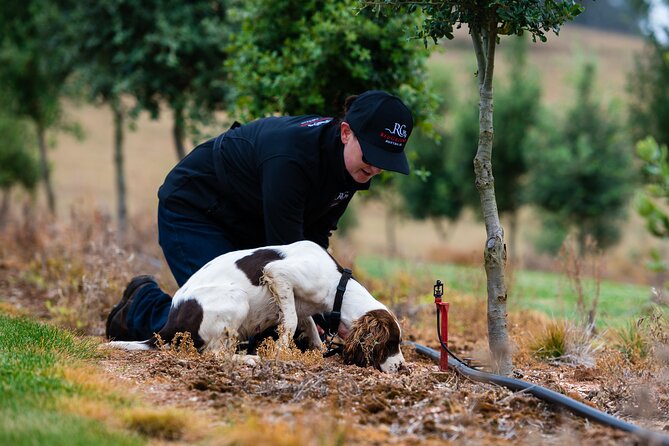
- Dog-led truffle hunting behind the guide through the trees until the dogs indicate a truffle under the soil
- Biosecurity footbath and truffiere walk before you start hunting
- Ripeness and quality assessment where you can watch (and even try) digging
- Warm-up in the Truffle Hunting Lodge with multiple savory tastings plus a sweet finish
- Fresh truffles available to purchase on the day
RedGround in Oberon: the setting and what you’re really paying for
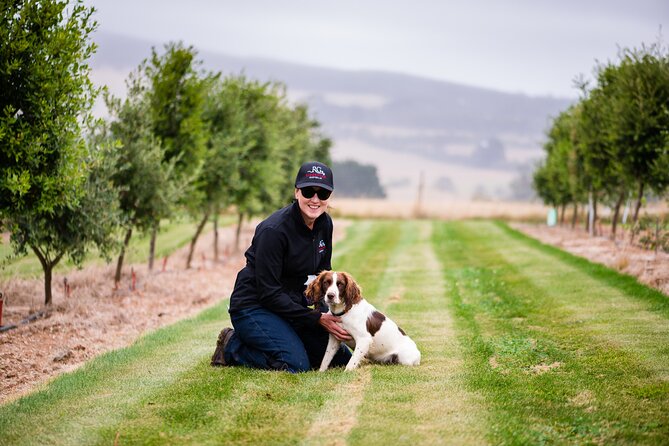
This experience runs from a farm-style meeting point at 264 Titania Rd, Oberon NSW 2787, starting at 10:00 am and ending back where you began. It’s priced at $157.79 per person for about 3 hours, and groups are capped at 16 travelers. That smaller group size matters. It keeps the hunt from feeling crowded and gives you room to ask questions during the talk and the grading session.
The big value here isn’t just that you get to find a truffle. It’s that the day is structured around the same ideas chefs care about: aroma, ripeness, and quality. The farm walk sets you up for what you’re about to taste, then the lodge tastings reinforce it. You’re not bouncing between unrelated stops.
RedGround also leans into explanation. You start with a talk in the Truffle Hunting Lodge about what makes truffles so sought after and why they’re expensive. After that, you’re guided to the truffiere, where you’ll learn about the different truffle varieties the farm grows. Then you hunt. Then you grade. Then you taste again, including a sweet truffle tasting to finish.
That sequence is the reason the experience feels like more than a novelty activity in the Blue Mountains.
You can also read our reviews of more tours and experiences in Blue Mountains.

Step one: lodge talk, truffle tasting, and the “why” behind the hunt
You begin at the Truffle Hunting Lodge with a truffle tasting plus an informative talk on truffles. The hosts explain what makes truffle one of the most sought-after and expensive culinary ingredients in the world, and they connect it to aromatic properties. This matters because truffles can be a guessing game for first-timers. You might know truffle as an Italian menu word, but you may not know what it is actually doing to food.
After those initial tastes, you’re guided toward the area where hunting happens. The next practical step is a biosecurity footbath. It’s not glamorous, but it’s a key part of how farms protect growing conditions and keep things clean. It also signals that this is run like a working operation, not a casual picnic.
Then you’re taken through the truffiere, with guidance on the different truffle varieties RedGround grows. If you want to understand truffles beyond the word, this is where you get the framework: these are living, managed products. You’re learning that the farm has techniques, and the hunt is timed and guided, not random.
Also, this part sets expectations for what comes next. The talk and the variety discussion help you understand why the hunt ends with assessment. You’re not just picking something up. You’re looking for ripeness and quality.
The hunt itself: truffle hunting with dogs, digging, and judging ripeness
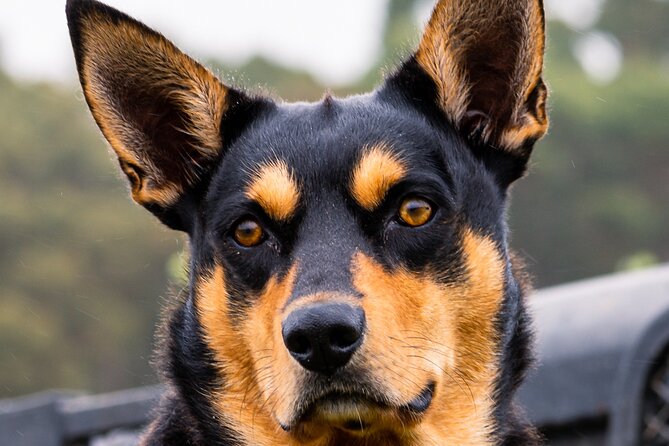
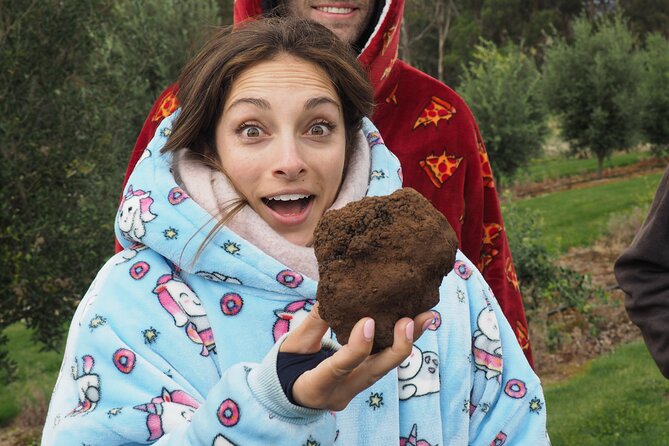
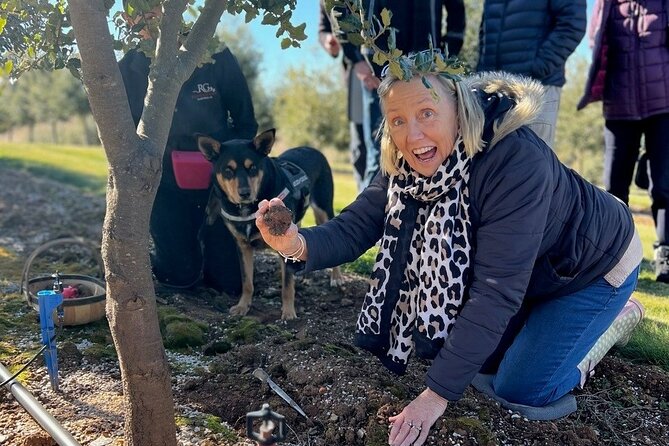
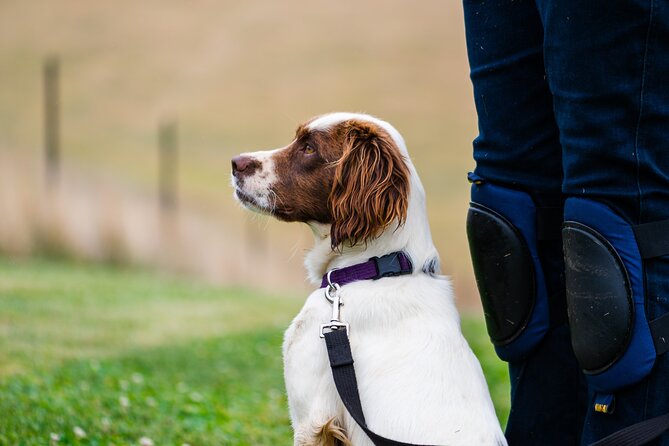
Now for the main event: the hunt. You’ll be guided out to follow behind the truffle hunting dogs through the trees. When the dogs indicate a truffle under the soil, you’ll see how it’s uncovered.
This is the part that feels both fun and oddly educational. The dogs do the searching, but the human part is still in charge of process. You’ll watch how the truffle is uncovered and assessed for ripeness and quality before removal. That assessment is a big theme during the experience, because later, you’ll also see how truffles are graded according to quality.
You’ll also have the chance to try your hand at digging a truffle up yourself. That sounds like a small detail, but it changes the whole feel of the experience. Instead of being a spectator, you get a taste of the careful work involved. It’s one thing to hear about ripeness. It’s another to feel how you have to work around something delicate.
From a practical standpoint, expect a walk through the hunting area as you follow the dogs. The experience is weather-dependent in the sense that you can only hunt in workable outdoor conditions. One review described weather turning with a dusting of snow, but the day still worked because the lodge and tastings keep the experience moving even when the outdoors gets colder.
If you’re coming from elsewhere in the Blue Mountains, dress like you might step into farm weather: closed-toe shoes you don’t mind getting dirty, layers, and something warm for the time when you return to the lodge.
Back to the lodge: warm-up, savory tastings, and grading in the kitchen
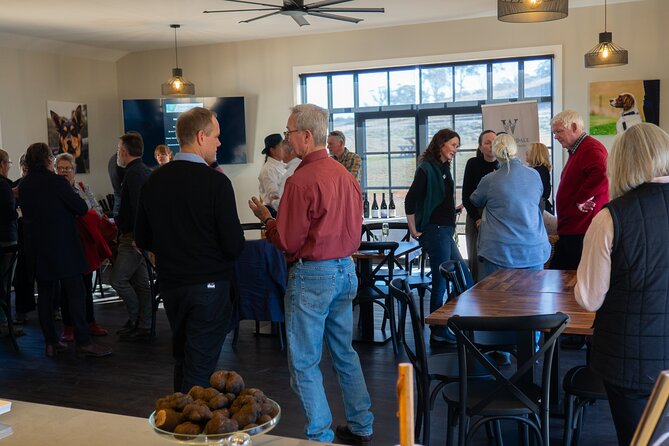
After the hunt, you return to warm up in the Truffle Hunting Lodge. This is where the day shifts from physical activity to food appreciation.
You’ll enjoy several more savory truffle tastings, guided by another informative talk. The hosts explain how truffles are graded according to quality. This grading piece ties directly back to what you saw outdoors during the uncovered-and-assessed moment. If you ever wondered why truffles can command very different prices, this is the closest thing you get on the day to the logic of value: quality and ripeness aren’t just marketing words.
One detail I found especially useful is that the tastings are designed to highlight how truffle flavor works with different types of ingredients. The experience notes that truffle pairs very well with foods rich in fats. That helps explain why your tastings include foods with gluten, dairy, eggs, and nuts. The point isn’t to be fancy. It’s to help you taste the aromatic impact in a way that feels consistent on the plate.
Finally, the meal-style flow ends with a sweet truffle tasting. Ending with sweet is a smart move, because it tests whether your brain has boxed truffle into only savory uses. You get one more chance to notice aroma and how it works across different food styles.
Some people may also mention extra touches as part of the overall tasting mood (one review referenced champagne). Since it’s not listed as a guarantee in the base description, think of it as a possible add-on depending on how the day is run.
What you’ll taste: why the menu includes gluten, dairy, eggs, and nuts
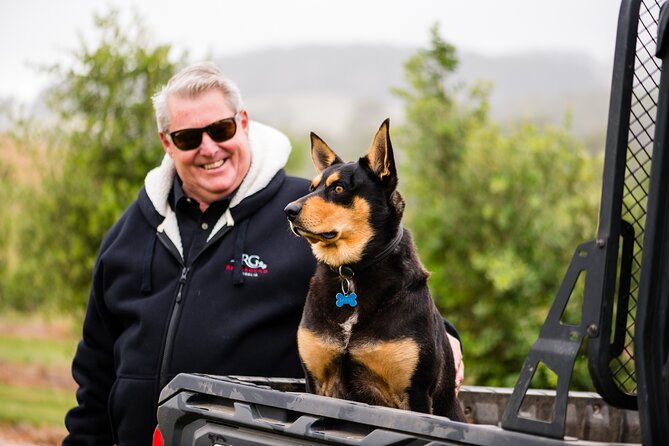
Let’s talk about the tasting approach, because it’s one of the biggest reasons the experience earns consistently high marks.
The tour explicitly sets you up for how truffle works with other flavors and textures. You start with a truffle tasting right away, so you get a baseline taste early. Then the hunt happens. Then you taste again with multiple savory dishes, followed by a sweet finish. This lets you compare without having to do mental math in your head.
Also, the menu is built around fat-rich pairings. That’s not just culinary trivia. It’s practical: fats carry aroma and help you perceive subtle notes. That’s exactly what you’re aiming for when the hosts talk about truffles’ aromatic properties.
But there’s a trade-off. The tastings include gluten, dairy, eggs, and nuts, so this tour may not suit anyone with allergies, or it may require extra caution and confirmation with the operator before you arrive. If you’re sensitive to any of those, you don’t want to be surprised at the lodge tasting stage.
If you’re not dealing with allergies and you like rich food, you should enjoy the tasting menu as a guided way to learn. It’s basically a flavor lesson, just served in portions instead of in a classroom.
Getting the most out of your 10:00 am start in Oberon
This experience starts at 10:00 am, and it runs about 3 hours. That means it fits nicely into a day trip plan if you’re already in the Blue Mountains area, but it’s also long enough to feel like a real activity rather than a quick stop.
Here’s how to get the most out of it without making it stressful:
- Plan for outdoor time first, food second. You’re going to walk and hunt before the lodge tastings. Wear comfortable clothes you can move in.
- Bring a sense of curiosity. The hosts explain growing techniques, dogs, truffle varieties, ripeness, and grading. If you ask a question, you’ll likely get a clear answer.
- Leave room for purchases. Fresh truffles are available to buy on the day. If you love cooking, you might want a plan for transport. If you don’t cook much, consider buying a small amount and using it thoughtfully.
Because groups max out at 16, you’re unlikely to feel lost in a crowd. Still, arrive on time so you don’t miss the first tasting and the opening talk.
Price and value: $157.79 for a full farm hunt plus tastings
At $157.79 per person, this isn’t the cheapest thing in the Blue Mountains. But it’s also not priced like a generic tasting platter.
You’re paying for multiple layers:
- A guided truffle hunting process with dogs and hands-on digging
- An educational talk sequence (growing, varieties, grading, and why truffles matter to chefs)
- Multiple savory tastings plus a sweet tasting
- A farm setting built around one product, not a stop on a larger circuit
That’s why the math can work, especially if you’re a food person or if you’ve never understood truffle quality before. The day is short enough that it doesn’t drag, but structured enough to give you real context.
One more practical note: this experience is booked on average 44 days in advance, so it’s smart to lock it in if you’re set on a specific date. Popularity can mean fewer openings.
Who should book this truffle hunt and taste
You’ll probably love it if:
- You like food experiences that explain why something tastes the way it does
- You want an outdoor farm activity that’s more than just a walk
- You enjoy structured tastings that teach you something, not just sample small bites
You should think twice if:
- You have allergies or strong dietary restrictions, since the tastings include gluten, dairy, eggs, and nuts
- You dislike outdoor activity in cooler conditions, since there is still outdoor time during the hunt
It also works well as a memorable half-day plan for couples and small groups, given the maximum of 16 travelers and the mix of story + hunt + food.
Should you book the Truffle Hunt and Taste Experience in Oberon?
If you want a true Oberon truffle moment that goes beyond tasting for the sake of tasting, this is a strong choice. The structure is the key: initial tasting and talks set context, the dog-led hunt provides a real target, and then the lodge grading and tastings connect the dots.
Book it if you’re excited by the idea of truffle aroma and quality, and if you’re comfortable with a menu that includes gluten, dairy, eggs, and nuts. Pass or ask careful questions first if dietary needs are part of your planning.
FAQ
How long is the Truffle Hunt and Taste Experience?
It runs for about 3 hours.
What time does the tour start, and where do I meet it?
The tour starts at 10:00 am. Meet at 264 Titania Rd, Oberon NSW 2787, Australia. The experience ends back at the meeting point.
What happens during the truffle hunt?
You’ll follow behind truffle hunting dogs through the trees until they indicate a truffle under the soil. You’ll see the truffle uncovered and assessed for ripeness and quality, and you may also try digging a truffle yourself.
What tastings are included?
You’ll have an initial truffle tasting, then several more savory truffle tastings, and finally a sweet truffle tasting. The tastings include foods with gluten, dairy, eggs, and nuts.
Can I buy fresh truffles after the experience?
Yes. Fresh truffles are available to purchase on the day.
How big are the groups?
The experience has a maximum of 16 travelers.
Is there free cancellation?
Yes. You can cancel for a full refund up to 24 hours before the experience starts.