REVIEW · SYDNEY
Sydney Walking Tour including The Rocks (small group)
Book on Viator →Operated by Sydney's Wonders Tours · Bookable on Viator
Sydney’s past is written in streets. This small-group walk strings together major sights and street-level history, from Hyde Park’s memorials to The Rocks laneways by Circular Quay. You get a clear, story-led route that helps you understand how Sydney grew, with guides who keep the pace friendly and the facts easy to follow.
Two things I really like: the group size (max 16) keeps questions welcome, and the route includes several free stops you can revisit later. One thing to plan for: it’s a solid 2 hours 30 minutes of walking, so comfortable shoes and some sun protection matter, especially on a hot day.
In This Review
- Key highlights at a glance
- Starting at Hyde Park: where Sydney’s story gets a green beginning
- St Mary’s Cathedral and Hyde Park Barracks: faith and punishment in the same corridor
- Queen’s Square to Sydney Eye Hospital: the legal world and the Rum Hospital deal
- Macquarie Street, then the botanic break: architecture and Aboriginal connection
- Conservatorium to The Edge of the Trees: old government stables, new reflections
- Macquarie Place Park and Customs House: the city’s first public space and its trade engine
- The Rocks by design: laneways, lanes, and convict-era street life
- Why the Rocks segment feels like more than just walking
- Timing, pace, and comfort: what to expect on the ground
- Guides and first-time value: why this works early in your trip
- Price and value: is $32.28 worth it?
- Should you book this Sydney and The Rocks walking tour?
- FAQ
- How long is the Sydney Walking Tour including The Rocks?
- What is the meeting point and start time?
- Where does the tour end?
- How many people are in the group?
- Do you need admission tickets for the stops?
- Is the ticket mobile?
- Is service animals allowed?
- What walking level should I expect?
- Is it near public transportation?
- What’s the cancellation window for a full refund?
- Do I get a guide for the whole tour?
Key highlights at a glance
- Max 16 people means you actually hear the guide and can ask questions.
- Mix of big landmarks and back-lane history across Hyde Park, the legal precinct, and The Rocks.
- Convict-era and colonial stories tied to places like Hyde Park Barracks, Customs House, and the Rum Hospital building.
- A heat-aware pace that slows down when needed, with frequent breaks and shaded moments.
- Great ending point at Campbells Cove for views, food options, and easy transit.
Starting at Hyde Park: where Sydney’s story gets a green beginning
The tour meets at the Archibald Memorial Fountain in Hyde Park North, right by Elizabeth Street. This is a smart start. You ease into the day with an easy-to-navigate landmark, then walk outward into areas that feel totally different once you leave the park behind.
Hyde Park is Australia’s oldest park, and it works like a living “pause button” before the urban scenes. You’ll see the manicured lawns and major memorial energy in the middle of the city, which sets the tone for what comes next: Sydney’s history isn’t just in museums. It’s in monuments, street alignments, and the way neighborhoods grew.
From here, the walk turns from greenspace into stone, with several major buildings coming up fast. That shift is one of the reasons this tour works well as an orientation day. You’re not just learning trivia—you’re building a mental map.
You can also read our reviews of more walking tours in Sydney
St Mary’s Cathedral and Hyde Park Barracks: faith and punishment in the same corridor
Next up is St. Mary’s Cathedral, a bold Gothic landmark that reads like it belongs in Europe. It’s a quick stop, but the payoff is how it frames Sydney’s Catholic heritage in a way that feels visual and immediate.
Then comes Hyde Park Barracks, a UNESCO World Heritage site tied to convict-era life and later immigration uses. This is the kind of stop that gives you context for the rest of the walk. Once you understand how the penal and migration systems shaped early Sydney, the later street stories in The Rocks land differently.
A practical note: since most stops are short and photo-friendly, you’ll likely move at a brisk but not stressful pace. The good news is the small group format makes it easier for the guide to keep everyone together.
Queen’s Square to Sydney Eye Hospital: the legal world and the Rum Hospital deal
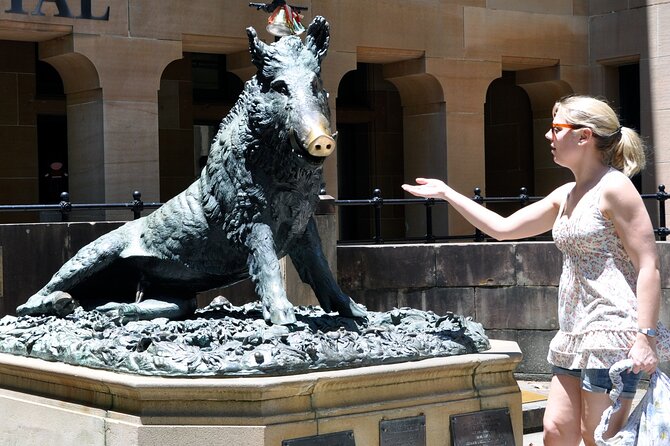
Queen’s Square is where the city’s legal presence shows up in architecture and space. Even without getting lost in court history, you can feel how this precinct functioned: power, institutions, and order were built into the urban plan.
After that, you reach Sydney Eye Hospital, associated with the Rum Hospital story. The tour’s description highlights the unusual deal behind its creation using rum. That detail matters because it turns an old building into a real-world business outcome, not just a pretty facade.
These “institution” stops are great value because they connect the dots. You see where decisions were made and you learn how early Sydney worked—who benefited, who paid, and how services developed out of messy circumstances.
Macquarie Street, then the botanic break: architecture and Aboriginal connection
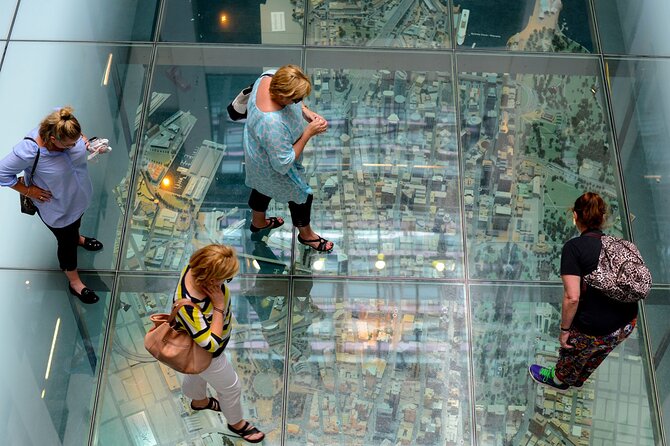
Macquarie Street is a long, straight spine of Sydney’s authority and old government presence. You’ll pass architectural landmarks that help explain why this area has always felt like the city’s decision-making center.
Then you get a pause in the form of the Royal Botanic Garden Sydney. The tour frames this as more than plants and paths. It also connects to Aboriginal culture and the idea that the land itself has deep meaning beyond European settlement.
This stop is useful even if you’re not a “garden person.” It gives you breathing room from city walls and lets you reset for the next wave of historic buildings.
Conservatorium to The Edge of the Trees: old government stables, new reflections
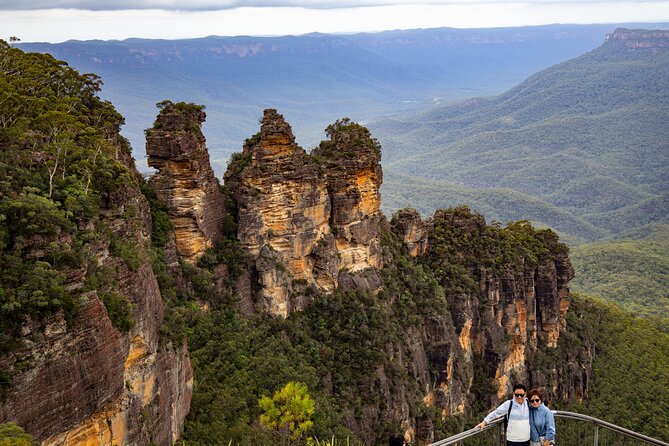
The Sydney Conservatorium of Music is housed in the Old Government Stables. That’s a neat transformation to keep in mind: a building built for horses and carriages now supports music and performance. It’s one of those examples of how cities reuse serious infrastructure instead of wiping the slate clean.
A few minutes later, you reach The Edge of the Trees, an artwork tied to reflection on the intersection of Aboriginal and European cultures. Even as a short stop, it gives you a more modern layer to the day. The tour isn’t only about what happened centuries ago. It also asks what those crossings mean now.
If you like walking tours that connect past to present, this pair of stops tends to land well.
- Blue Mountains Small-Group Tour from Sydney with Scenic World,Sydney Zoo & Ferry
★ 5.0 · 3,709 reviews



Macquarie Place Park and Customs House: the city’s first public space and its trade engine
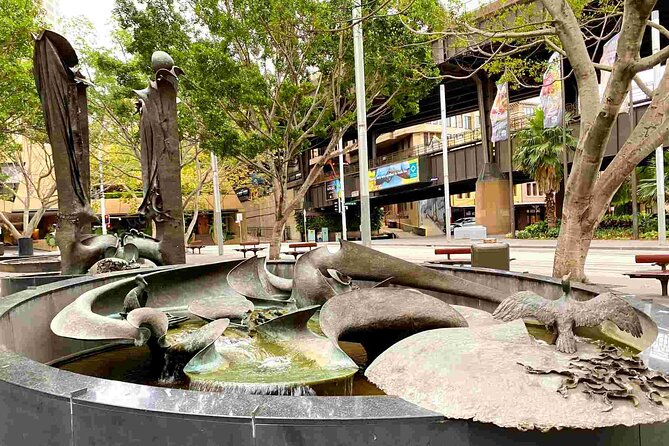
Macquarie Place Park is small, but it has outsized importance: it’s described as the city’s first public space. That makes it a perfect “quick hit” stop. You’re not stuck wandering for long, but you still learn something that changes how you view the city’s center.
From there, you move to Customs House. This is the trade and shipping era made stone-solid. The building served as the heart of Sydney’s trade, overseeing arrivals of ships and goods. Once you’ve got that in mind, later waterfront scenes feel less like scenery and more like a working system.
It’s also an easy transition toward The Rocks and Circular Quay, because shipping and commerce are exactly what drove early neighborhood growth.
The Rocks by design: laneways, lanes, and convict-era street life
This is where the tour turns into the postcard part, but with real explanation behind it.
You spend time in The Rocks, described as a living museum of cobblestone lanes and sandstone buildings tied to convict history. That’s the big picture—but what makes the walk enjoyable is the sequence of smaller laneway stops that each add a different shade to the area.
Suez Canal is one of the memorable narrow laneways, known for stories of criminals and shadowy characters. Nurses Walk brings in the human side of early life through the role of nurses and the challenges faced by pioneering women. Playfair Street is a smaller lane that helps you feel the neighborhood texture.
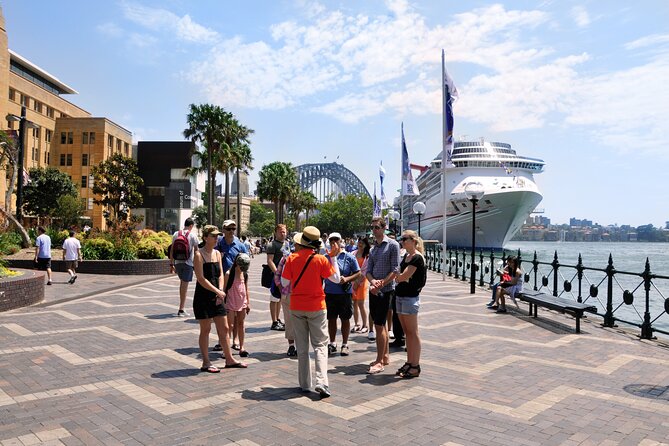
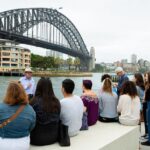
Then you cover Argyle Street and George Street. These are the more “street-level, city-life” arteries of The Rocks, showing how the area moved from earlier commercial days into its current role with entertainment and modern energy. Campbells Cove finishes the walk with harbor views—Opera House and Harbour Bridge in your line of sight, with a setting that’s perfect for stopping for a snack or beer.
Why the Rocks segment feels like more than just walking
A common mistake with city walks is staying only at the obvious highlights. This route mixes viewpoints and short architecture pauses with back-lane storytelling, so you don’t just take pictures. You understand what you’re looking at.
It’s also a good endgame. Campbells Cove makes it easy to continue your day without getting stuck at a dead-end tourist zone.
Timing, pace, and comfort: what to expect on the ground
The tour runs about 2 hours 30 minutes. You’ll make multiple short stops (mostly a few minutes each), with a longer stretch dedicated to The Rocks itself. The walking level is best described as moderate. You’ll cover enough ground that comfortable footwear is not optional.
One useful tip from the experience vibe: guides often manage the heat well. People noted that pauses in shade happen when possible, and the pace stays considerate—even when it’s extremely hot. Still, bring sun protection. If the day is sunny, you’ll be happier with sunscreen and a hat.
The tour is also built for conversation. With a group capped at 16, you’re not just standing in a crowd waiting for the guide to talk. You can ask questions and get direct answers. That’s a big part of why the rating stays so strong.
Guides and first-time value: why this works early in your trip
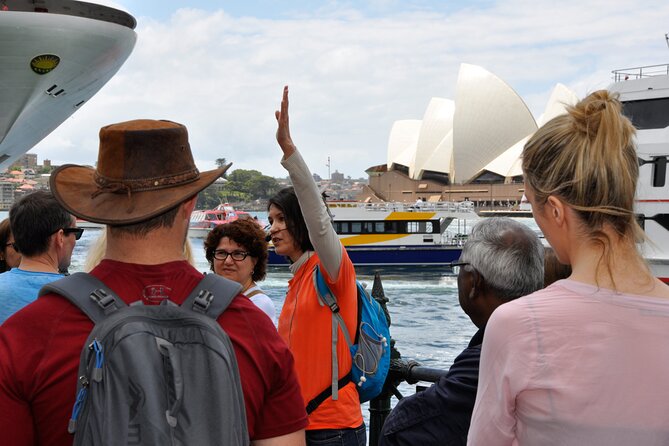
The tour is led by an experienced guide team, and names like Lily show up often in feedback tied to clear explanations and a friendly approach. You may also hear guides referred to as Leilani, Laina, or Lele—same idea: people come away praising the way the stories are told and how the guide keeps everyone comfortable.
This is an excellent first-day option because it gives you practical city orientation. You’ll learn:
- what parts of central Sydney connect to each other,
- where the major historic sites sit relative to modern streets,
- and which places are worth returning to on your own.
It’s also value-heavy because many of the stops are free to view, so you’re not paying twice for entry fees. The main cost is the guide and the structure that ties it all together.
Price and value: is $32.28 worth it?
At $32.28 per person, this tour is priced like a short, high-impact historic orientation. You’re paying for guided storytelling, a tight route, and small-group attention—especially the max-16 size.
The value equation improves if you’re the type of traveler who likes to:
- start with context before doing museums,
- build a route you can later repeat at your own pace,
- and get help spotting what’s worth your time.
If you already know Sydney well and don’t care about convict-era and institutional history, it may feel a bit introductory. But for most first-time visitors—or anyone who wants a smarter, tighter way to see the center—this is a fair use of time.
Should you book this Sydney and The Rocks walking tour?
Book it if you want a compact way to understand central Sydney and The Rocks without spending your day jumping between tickets and transit. It’s especially good on a first day, because it helps you get your bearings fast and points you toward places to revisit later—often for free.
Skip or consider something else if you have very limited mobility or you dislike walking for long stretches, since you’ll be moving steadily for about 2.5 hours. Also, if you’re allergic to history (real people, real systems, real consequences), you might prefer a more viewpoint-and-photo-focused tour.
FAQ
How long is the Sydney Walking Tour including The Rocks?
It’s approximately 2 hours 30 minutes.
What is the meeting point and start time?
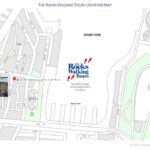
The meeting point is Archibald Memorial Fountain, Hyde Park North, 110 Elizabeth St, Sydney NSW 2000, and it starts at 10:30 am.
Where does the tour end?
The tour ends at Campbells Cove, 4 Circular Quay W, The Rocks NSW 2000.
How many people are in the group?
The tour is a small group with a maximum of 16 travelers.
Do you need admission tickets for the stops?
The tour notes free admission for the listed stops.
Is the ticket mobile?
Yes, it includes a mobile ticket.
Is service animals allowed?
Yes, service animals are allowed.
What walking level should I expect?
It’s listed as requiring a moderate physical fitness level.
Is it near public transportation?
Yes, it’s near public transportation.
What’s the cancellation window for a full refund?
You can cancel up to 24 hours in advance for a full refund.
Do I get a guide for the whole tour?
Yes, it’s led by an expert guide as a guided walking tour.
You Might Also Enjoy


More Walking Tours in Sydney
More Tours in Sydney
- Blue Mountains Small-Group Tour from Sydney with Scenic World,Sydney Zoo & Ferry
★ 5.0 · 3,709 reviews
More Tour Reviews in Sydney
- Blue Mountains Small-Group Tour from Sydney with Scenic World,Sydney Zoo & Ferry
★ 5.0 · 3,709 reviews